Finding the right home in Menlo Park, California, can be challenging. With established residential neighborhoods, convenient access to Silicon Valley employment centers, and a limited supply of desirable properties, buyers often face competition for well-located homes.
However, successfully purchasing a home involves much more than finding an attractive listing and submitting an offer.
Buyers must evaluate mortgage financing, property values, neighborhood characteristics, building conditions, and the contractual obligations associated with a California real estate transaction.
Whether you are purchasing your first home, moving to a larger residence, or searching for new construction, understanding the local market can help you make better decisions.
Here are 12 essential tips for finding and buying a home in Menlo Park in 2026 and 2027.
What Is the Menlo Park Housing Market Like in 2026?
Menlo Park remains one of the Peninsula's more expensive and competitive residential real estate markets.
According to MLSListings' October 2026 statistics, the median sale price for a single-family home in Menlo Park was approximately $3,250,000.
The market recorded 34 active single-family listings, 30 new listings, and 25 closed sales during the month. The median marketing period was 12 days, with approximately 1.8 months of inventory.
Menlo Park Market Indicator | October 2026 |
|---|---|
Median single-family sale price | $3,250,000 |
Active single-family listings | 34 |
New single-family listings | 30 |
Closed single-family sales | 25 |
Median days on market | 12 |
Months of inventory | 1.8 |
These statistics suggest relatively limited inventory, although individual properties may experience very different levels of buyer interest.
A renovated home in Central Menlo may attract substantial competition, while an older property requiring extensive repairs or a home with an unrealistic asking price may remain available longer.
Additionally, citywide median prices can fluctuate depending on the mix of properties sold during a particular month.
For buyers, the most useful information is often recent sales involving properties similar to the home they intend to purchase.
Source: MLSListings — Menlo Park Real Estate Market.
1. Understand the Different Neighborhoods in Menlo Park
One of the first steps in finding a home is determining which neighborhood best matches your priorities and budget.
Menlo Park contains several established residential communities with different housing styles, lot sizes, locations, and price ranges.
Central Menlo
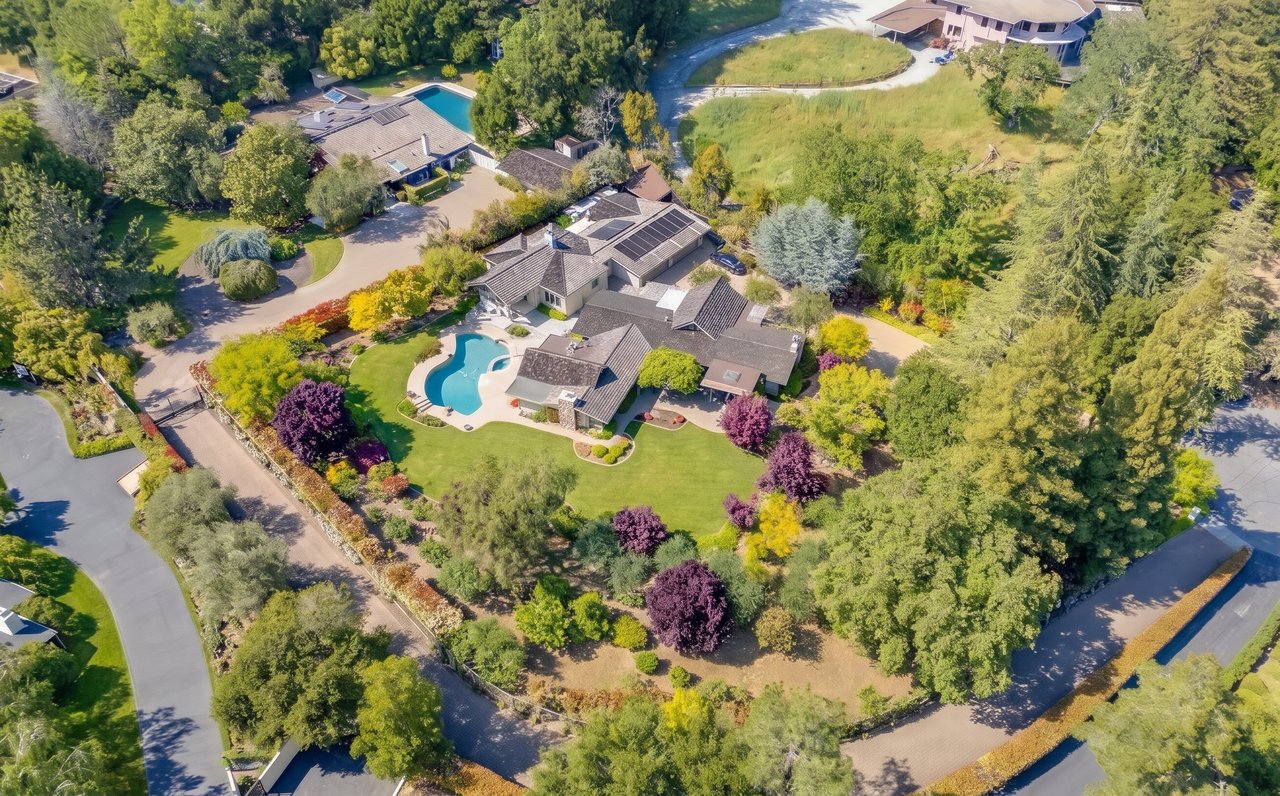
Central Menlo is known for its established residential streets, mature landscaping, and a variety of traditional, renovated, and newly constructed single-family homes.
Some properties feature relatively generous lots and substantial privacy. Buyers should compare location, land value, and redevelopment characteristics when evaluating homes in this neighborhood.
Allied Arts
Allied Arts offers an appealing combination of residential character and convenient access to Downtown Menlo Park, Stanford University, and nearby amenities.
Homes vary in age, architectural style, size, and condition. Some buyers place a premium on the neighborhood's accessibility and established streets.
Sharon Heights
Sharon Heights offers a different residential environment, including hillside settings, larger homes, condominiums, and townhomes.
Some properties feature scenic views, while others offer convenient access to Interstate 280 and nearby communities.
The Willows
The Willows includes established residential streets with cottages, ranch-style homes, renovated residences, and newer construction.
The neighborhood appeals to buyers seeking access to Palo Alto, Menlo Park amenities, and nearby employment centers.
Belle Haven
Belle Haven offers a different combination of housing types, lot sizes, and property prices from many western Menlo Park neighborhoods.
Buyers should examine individual property characteristics, zoning, transportation access, and relevant development considerations.
Because school district boundaries, municipal boundaries, and postal addresses do not always align, buyers should verify the applicable school assignments and jurisdiction for each specific property.
2. Establish Your Budget Before Searching for Homes
Before reviewing available properties, determine how much you can comfortably spend.
Your purchasing budget should account for more than the amount a mortgage lender may approve.
In addition to the purchase price and down payment, consider:
- Mortgage principal and interest.
- Property taxes.
- Homeowners insurance.
- Closing costs.
- Maintenance and repairs.
- HOA fees, when applicable.
- Future renovations or improvements.
- Emergency cash reserves.
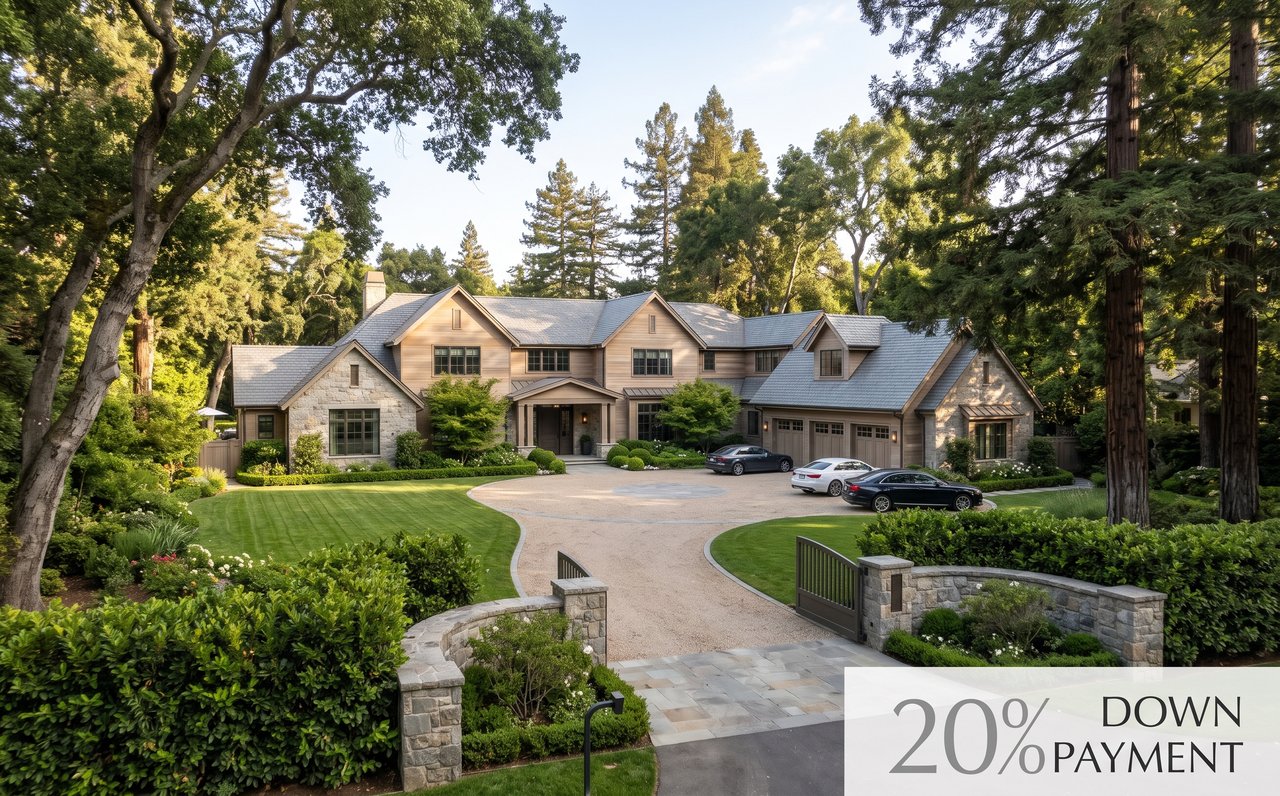
For example, a buyer purchasing a $3 million residence with a 20% down payment would need $600,000 for the down payment, plus applicable closing costs and reserves.
The remaining $2.4 million mortgage would involve substantial monthly payments, with the exact amount depending on loan terms.
Financial preparation helps buyers focus on appropriate properties and avoid entering a transaction that creates unnecessary financial pressure.
3. Obtain Mortgage Preapproval Before Making an Offer
In a competitive housing market, being financially prepared can improve your ability to act when a suitable property becomes available.
Mortgage preapproval helps establish the approximate amount a lender may be willing to finance, subject to underwriting and other requirements.
It can also help buyers understand the expected monthly payment and cash needed to complete a purchase.
For higher-priced Menlo Park properties, buyers may need jumbo mortgage financing.
Jumbo loans can have different underwriting standards, down payment requirements, cash reserve expectations, and interest rates from conventional conforming mortgages.
Buyers should compare loan programs and ask lenders about anticipated underwriting and closing timelines.
A strong preapproval may help demonstrate financial readiness to a seller, but it does not guarantee final loan approval.
4. Understand How Mortgage Rates Affect Purchasing Power
Mortgage rates are an important component of the homebuying decision.
According to Freddie Mac, the national average rate for a 30-year fixed mortgage was 7.24% as of October 29, 2026.
This is substantially higher than the unusually low mortgage rates available during 2020 and 2021.
However, future rate changes cannot be predicted reliably.
Buyers should avoid assuming that delaying a purchase will automatically result in more favorable financing or lower property prices.
Even if interest rates decline, increased buyer demand could create additional competition for desirable homes.
Rather than attempting to predict the lowest possible mortgage rate, buyers should evaluate whether they can comfortably afford the property under available financing terms.
For updated national mortgage data, consult Freddie Mac's Primary Mortgage Market Survey.
5. Monitor New Listings and Recently Sold Properties
One of the most effective ways to understand Menlo Park real estate is to monitor both active listings and recently completed sales.
Active listings show what is currently available, while closed transactions provide evidence of prices buyers have recently agreed to pay.
However, asking prices do not always represent market value.
Some sellers intentionally price their properties below their anticipated selling prices to attract attention and encourage competitive offers.
Other properties may be priced above market expectations and require adjustments before selling.
Buyers should evaluate:
- New properties entering the market.
- Recent comparable sales.
- Days on market.
- Changes in asking prices.
- Differences in property condition.
- Lot size and architectural characteristics.
- Current competition within the relevant price range.
Start your search by exploring Menlo Park homes for sale.
6. Don't Assume the Asking Price Is the Property's Market Value
In a competitive market, buyers sometimes make the mistake of determining their offer based solely on how much they are willing to pay above the asking price.
For example, offering $200,000 above asking does not necessarily mean the buyer is overpaying if the listing price was intentionally set below comparable market value.
Conversely, an offer below asking may still be excessive if the home is substantially overpriced.
A meaningful property valuation should consider:
- Recent sales involving comparable homes.
- Neighborhood and street location.
- Building size and functional layout.
- Construction age and quality.
- Condition and recent renovations.
- Lot size and usable area.
- Potential for future improvements.
The objective is to establish a reasonable valuation range and determine how much the property is worth to you based on its characteristics and your financial circumstances.
7. Understand the Risks of Multiple-Offer Situations
Desirable Menlo Park homes may attract multiple offers, particularly when inventory is limited.
However, participating in a bidding competition requires discipline.
Before making an offer, buyers should establish their maximum comfortable purchase price and understand the risks of the proposed contractual terms.
A seller may evaluate several factors beyond the offered price, including:
- Buyer financing qualifications.
- Earnest money deposit.
- Loan and appraisal contingencies.
- Property investigation periods.
- Proposed closing date.
- Possession and rent-back terms.
- Requested seller concessions.
Some buyers attempt to make their offers more attractive by waiving contractual contingencies.
However, eliminating financing, appraisal, or property investigation protections can expose buyers to substantial risks.
Buyers should understand the possible consequences before agreeing to terms that limit their ability to cancel a transaction.
For a more detailed discussion, read our guide to multiple-offer situations in Menlo Park.
8. Evaluate New Construction and Existing Homes Differently
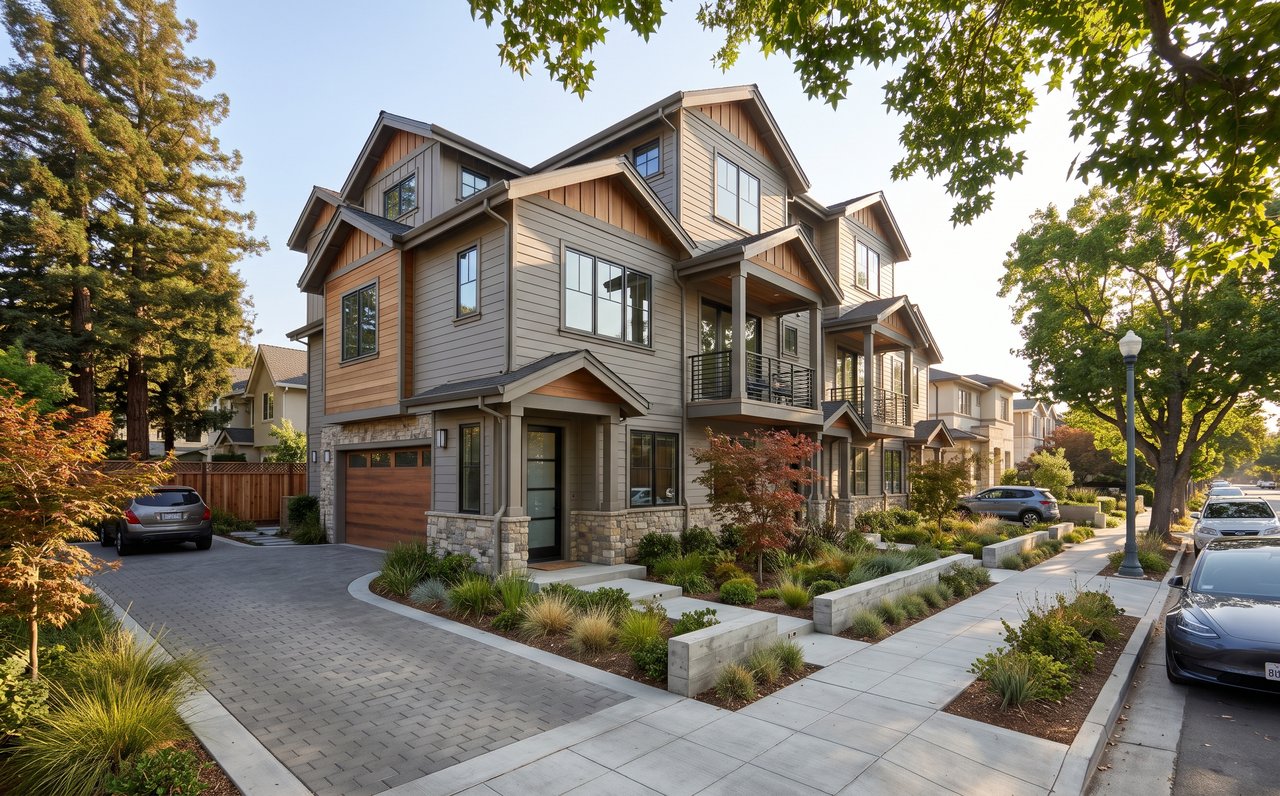
Menlo Park offers a combination of newly constructed luxury homes, extensively renovated properties, and older residences.
Each category presents different opportunities and considerations.
New Construction
Newly constructed homes may offer modern layouts, energy-efficient systems, contemporary building materials, and premium amenities.
However, buyers should evaluate construction quality, permits, warranties, and the property's actual market value.
New construction does not automatically mean that every building component is free from defects.
Older Homes
Older homes may offer opportunities for remodeling or expansion and can sometimes provide attractive underlying land value.
However, buyers should evaluate the condition of major systems and estimate the cost of any necessary improvements.
When comparing new construction with an older home, the appropriate financial analysis should consider the purchase price, anticipated repairs, possible renovations, and long-term maintenance costs.
9. Pay Attention to Lot Size, Setbacks, and Redevelopment Potential
In Menlo Park, the underlying residential land can represent a substantial portion of a property's value.
This is especially relevant when purchasing an older residence with plans to expand, remodel, or rebuild.
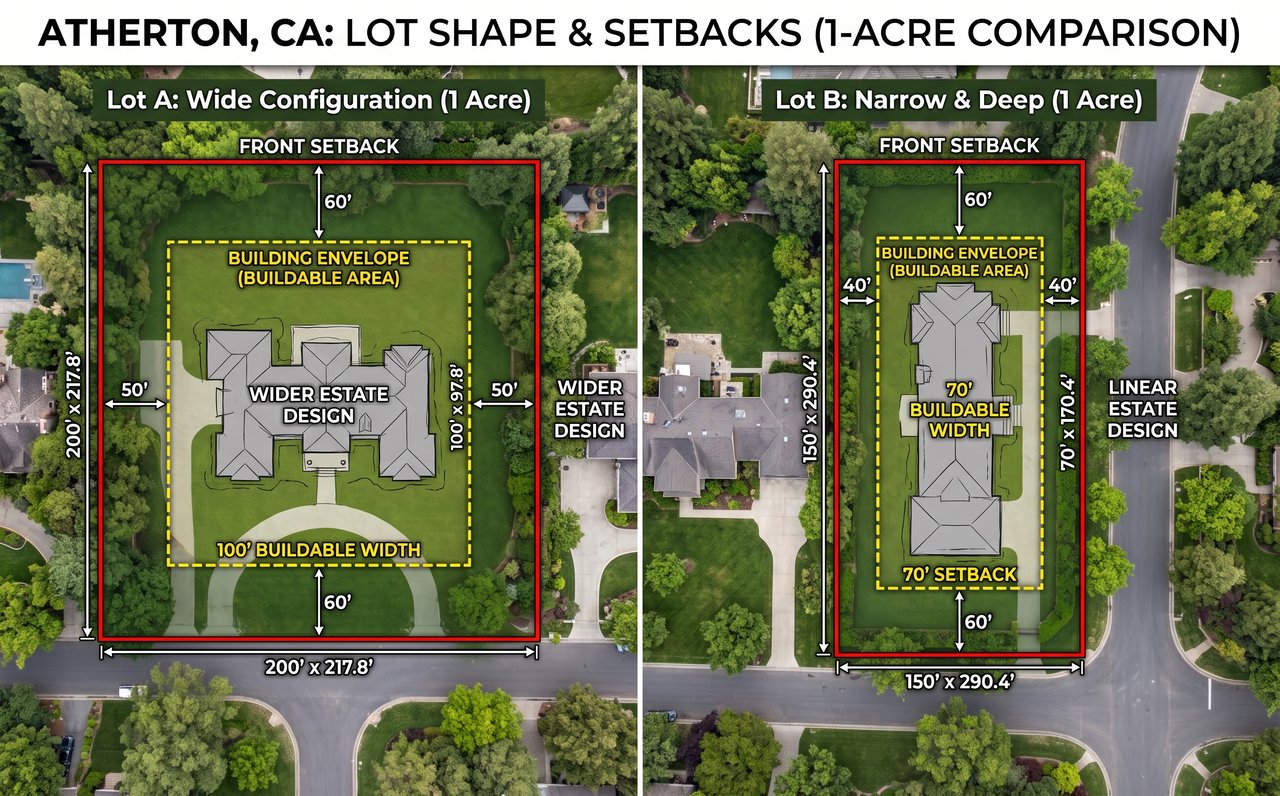
However, a large lot does not automatically mean that a buyer can construct a correspondingly large home.
Development potential may be affected by:
- Applicable zoning.
- Building setbacks.
- Permitted floor area and building height.
- Protected trees.
- Utility and access easements.
- Existing drainage infrastructure.
- Lot configuration and topography.
- Applicable state housing laws.
California law may provide additional development options for qualifying properties, including accessory dwelling units and certain residential projects.
However, buyers should verify specific development rights and requirements before relying on the possibility of future construction.
For buyers interested in redevelopment, preliminary discussions with architects, engineers, or qualified land-use professionals may be appropriate before removing applicable contingencies.
10. Review Property Inspections and Seller Disclosures Carefully
California residential real estate transactions commonly involve extensive disclosure documentation.
Depending on the transaction, buyers may receive a Transfer Disclosure Statement, Natural Hazard Disclosure Statement, inspection reports, permit information, and other relevant records.
These documents can help identify property conditions and potential financial risks.
Important issues may include:
- Foundation movement or structural concerns.
- Roof leaks or water intrusion.
- Drainage and sewer problems.
- Older plumbing and electrical systems.
- Unpermitted additions.
- Known boundary discrepancies.
- Recorded easements.
- Flood exposure and insurance considerations.
Buyers should not assume that seller-provided inspection reports eliminate the need for additional investigation.
Depending on the property, specialized inspections may be appropriate.
Reviewing these issues before completing the purchase can help avoid unexpected costs after closing.
11. Consider Proposition 19 If You Already Own a California Home
For existing homeowners planning to move to Menlo Park, California Proposition 19 may offer important property tax benefits.
Qualifying homeowners who are at least 55 years old, severely disabled, or affected by certain qualifying disasters may be eligible to transfer an existing property tax base to a replacement principal residence in California.
For some eligible homeowners, this can reduce the property tax consequences of moving.
However, the benefit is subject to eligibility requirements, timing rules, and adjustments based on the value of the replacement property.
When the replacement property's value exceeds the applicable statutory comparison threshold, the excess generally increases the transferred taxable value.
Proposition 19 does not automatically allow homeowners to purchase a more expensive residence while maintaining exactly the same property tax assessment.
Homeowners should review their specific circumstances before relying on a potential property tax transfer.
For official guidance, visit the California State Board of Equalization's Proposition 19 resources.
12. Work With a Real Estate Agent Who Understands Menlo Park
Finding a suitable home in Menlo Park requires more than receiving alerts when properties enter the MLS.
An experienced local agent should help buyers evaluate neighborhood differences, comparable sales, property conditions, and transaction terms.
For higher-value properties, familiarity with land value and development considerations can also be valuable.
A buyer's agent may assist with:
- Identifying suitable properties.
- Scheduling and coordinating showings.
- Reviewing recent comparable sales.
- Evaluating asking prices.
- Reviewing available disclosures and inspection information.
- Preparing and negotiating offers.
- Coordinating with lenders, inspectors, title companies, and escrow.
- Monitoring contractual deadlines.
California requires buyer-broker representation agreements in covered transactions under rules that became effective in 2025.
These agreements address the services provided, brokerage compensation, the circumstances under which compensation becomes payable, and the agreement's duration.
Brokerage compensation is negotiable and is not fixed by law.
Buyers should understand the proposed representation terms before signing an agreement.
For additional information, consult the California Department of Real Estate's buyer representation guidance.
How to Prepare to Buy a Home in Menlo Park
Before beginning your search, consider completing the following steps:
- Determine your budget: Calculate your available down payment, comfortable monthly payment, and required reserves.
- Arrange financing: Obtain mortgage preapproval or confirm proof of available funds.
- Research neighborhoods: Identify locations that match your housing preferences and transportation needs.
- Define your priorities: Decide which features are essential and which are optional.
- Monitor listings: Review available homes and recent comparable transactions.
- Review property condition: Evaluate inspections, disclosures, and potential repairs.
- Understand contract terms: Review contingencies, deposits, and deadlines.
- Establish your maximum offer: Avoid exceeding your financial limits simply because other buyers are competing.
Preparation can help buyers evaluate opportunities efficiently without sacrificing appropriate due diligence.
Frequently Asked Questions About Buying a Home in Menlo Park
What is the median home price in Menlo Park in 2026?
MLSListings reported a median single-family sale price of approximately $3.25 million in October 2026. Prices vary substantially by neighborhood, property type, lot size, and condition.
Is Menlo Park still a competitive real estate market?
Yes, particularly for desirable and appropriately priced single-family homes. However, competition varies by neighborhood, property condition, and price range. Not every listing receives multiple offers.
How much down payment do I need to buy a home in Menlo Park?
Down payment requirements depend on the mortgage program, purchase price, and borrower qualifications. A 20% down payment is common in some transactions but is not universally required. Higher-priced homes may involve jumbo mortgage requirements.
Should I buy a newly constructed or older home?
The best choice depends on your budget, preferences, renovation plans, and long-term goals. New construction may offer modern systems and fewer immediate improvements, while older properties may provide remodeling or redevelopment opportunities.
Can I build an ADU on a Menlo Park property?
Many qualifying residential properties may accommodate an ADU under applicable state and local requirements. However, property-specific restrictions and development standards must be verified.
Should I wait for mortgage rates to fall?
Waiting may be appropriate depending on your finances, but future mortgage rates and home prices are uncertain. Buyers should evaluate affordability under currently available financing terms rather than rely on future refinancing.
Is it necessary to hire a real estate agent to buy a home?
Buyers are not universally required to hire an agent, but professional representation can assist with property valuation, contract negotiation, disclosures, and transaction coordination. Buyers should understand the services and compensation terms before entering a representation agreement.
Final Thoughts: Finding the Right Home in Menlo Park
Menlo Park continues to attract buyers seeking desirable residential neighborhoods, proximity to Silicon Valley employment centers, and a variety of housing options.
However, its relatively high property prices and limited inventory require careful financial preparation and local market knowledge.
Successful homebuyers focus on more than finding an attractive property. They evaluate neighborhood differences, compare recent sales, understand financing, investigate property conditions, and establish reasonable purchase limits.
For buyers considering older homes or new construction, understanding lot characteristics, building regulations, and potential future expenses can be especially important.
The best approach is not simply to purchase as quickly as possible. It is to find a property that meets your needs, is appropriately valued, and fits your long-term financial goals.
Find Your Menlo Park Home With Milad Real Estate
At Milad Real Estate, we assist buyers and sellers throughout Menlo Park, Atherton, Palo Alto, Los Altos, Redwood City, Woodside, Portola Valley, and surrounding Silicon Valley communities.
As both a real estate broker and attorney, Aria Vatankhah brings experience in residential property transactions, contractual matters, property development, and land-use considerations.
Whether you are purchasing your first home, upgrading to a larger residence, or evaluating a property for future redevelopment, Milad Real Estate can help you assess the local market and available opportunities.
Explore Menlo Park homes for sale or contact Milad Real Estate to discuss your homebuying plans.
Aria Vatankhah
Founder, Milad Real Estate
Real Estate Broker | Attorney at Law
DRE License No. 01892083
Phone: 650-799-8168
Email: [email protected]
Sources and additional information:MLSListings — Menlo Park Housing Market; Freddie Mac — Primary Mortgage Market Survey; California Board of Equalization — Proposition 19; California Department of Real Estate — Buyer Representation; Consumer Financial Protection Bureau — Buying a Home.
Updated November 2026. Market statistics reflect the reporting periods indicated. Mortgage rates, inventory, and property values may change. Individual properties involve different financial, physical, and legal considerations. This article provides general real estate information and does not constitute individualized legal, lending, tax, or financial advice.