Buying a home in Menlo Park can be exciting, but finding the right property is only part of the challenge.
In desirable Silicon Valley neighborhoods, a well-priced home may attract several interested buyers shortly after being listed. When multiple purchasers submit offers, buyers must compete not only on price but also on financing, contractual terms, and their ability to complete the transaction.
For buyers considering Menlo Park homes for sale, this raises an important question:
How can you make your offer more competitive without paying more than the property is worth or taking unnecessary financial risks?
Successful buyers understand that winning a multiple-offer situation requires preparation, accurate property valuation, thoughtful contract terms, and disciplined negotiation.
Here are the most important strategies to consider when purchasing a home in Menlo Park.
Are Multiple Offers Still Common in Menlo Park in 2026?
Menlo Park remains one of Silicon Valley's competitive residential markets, although buyer activity varies by neighborhood, property type, and price range.
According to MLS-derived market data covering January through September 2026, Menlo Park single-family homes sold for approximately 105% of their asking prices on average, with a median sale price of approximately $3.58 million.
Half of the single-family homes sold during that period spent nine days or fewer on the market.
These figures indicate that competition remains meaningful, particularly for desirable and appropriately priced properties.
However, an average sale price above asking does not mean that every Menlo Park property receives multiple offers.
A well-maintained home in Central Menlo may attract a different level of interest from an older property requiring substantial repairs or a luxury residence in a higher price range.
Buyers should therefore examine recent comparable sales and the specific property's competitive position rather than assume every listing will generate a bidding war.
1. Establish Your Maximum Purchase Price Before Making an Offer
One of the biggest mistakes buyers make during a multiple-offer situation is allowing competition to determine how much they are willing to spend.
When several buyers want the same property, it can become tempting to increase an offer simply to avoid losing.
However, the highest offer is not necessarily a financially sound offer.
Before participating in a bidding situation, establish a maximum purchase price based on:
- Your available down payment and cash reserves.
- Your mortgage qualification and financing terms.
- The property's estimated market value.
- Expected repair and improvement expenses.
- Property taxes, insurance, and maintenance costs.
- Your long-term financial and housing objectives.
For example, a buyer might qualify for a $3 million purchase but determine that spending more than $2.7 million would create an uncomfortable monthly financial obligation.
That buyer should not automatically increase the offer to $3 million simply because another purchaser is competing for the property.
The objective is to purchase the right home at an acceptable price—not to win a bidding war at any cost.
2. Obtain Strong Mortgage Preapproval Before You Begin
A competitive offer begins with financial preparation.
Sellers want confidence that the selected buyer has the financial capacity to complete the transaction.
For buyers using mortgage financing, a preapproval letter from a reputable lender can help demonstrate financial readiness.
However, not all preapproval letters represent the same level of lender review.
Some are based primarily on information supplied by the borrower, while others involve more extensive verification of income, assets, credit, and employment.
When possible, buyers should work with a lender who has reviewed the required documentation and can explain the remaining underwriting conditions.
Before making an offer, ask your lender:
- Has my income and employment information been reviewed?
- Have my available down payment and reserves been verified?
- What loan amount and payment can I comfortably afford?
- What is the expected financing timeline?
- Will an appraisal be required?
- Are there any remaining underwriting concerns?
For higher-priced Menlo Park homes, jumbo mortgage underwriting requirements may differ from those for conforming loans.
Buyers should also avoid assuming that lender preapproval guarantees final loan approval.
3. Understand What the Seller Values Beyond Price
The highest purchase price does not always result in the strongest overall offer.
For many sellers, certainty, convenience, and the timing of the transaction are also important.
For example, a seller who has already purchased another property may prefer a relatively short escrow.
Another seller may need additional time to move and may favor an offer that provides a negotiated rent-back arrangement after closing.
Before preparing an offer, your buyer's agent should seek available information about the seller's preferences through appropriate communication with the listing agent.
Important considerations may include:
- Preferred closing date.
- Desired possession date.
- Potential rent-back arrangements.
- Financing and appraisal contingencies.
- Property investigation timelines.
- Requests for repairs or seller concessions.
- Financial qualifications and proof of funds.
A buyer who offers favorable terms addressing the seller's priorities may be competitive even without submitting the highest purchase price.
4. Make Your Earnest Money Deposit Competitive—but Understand the Risks
In California residential real estate transactions, buyers commonly provide an earnest money deposit after entering into a purchase agreement.
The deposit is generally placed with the escrow holder and applied toward the purchase price or closing costs if the transaction closes.
It demonstrates the buyer's commitment, but the deposit amount is negotiable and is not fixed by California law.
Unlike some other states, California's standard residential purchase process does not ordinarily require a separate, automatically nonrefundable due diligence fee paid directly to the seller.
What About the 3% Deposit?
Buyers sometimes hear that a 3% earnest money deposit is customary in California.
Although 3% is a frequently discussed amount, it is not a mandatory deposit requirement.
The percentage also has a distinct legal significance under California's liquidated damages rules.
Under California Civil Code Section 1675, certain residential purchase contracts involving an owner-occupied dwelling of up to four units may contain a valid liquidated damages provision.
When applicable statutory requirements are satisfied, liquidated damages of no more than 3% of the purchase price benefit from a rebuttable presumption of reasonableness.
However, a deposit does not automatically become forfeitable simply because the buyer cancels a transaction.
The parties' contractual rights, the status of contingencies, the basis for cancellation, and the validity of any liquidated damages provision all matter.
For example, a buyer who properly cancels under an applicable contractual contingency may have rights to recover the deposit.
Conversely, a buyer who breaches the purchase agreement without a contractual or legal justification may face financial consequences.
Buyers should understand these provisions before offering an unusually large deposit or agreeing to modifications affecting their cancellation rights.
5. Review Comparable Sales Before Deciding How Much to Offer
In competitive markets, asking prices do not always represent a property's likely market value.
Some sellers intentionally list homes below their expected selling prices to attract attention and encourage multiple offers.
Other properties may be listed closer to the seller's anticipated market value.
As a result, offering 5% or 10% above asking does not necessarily mean the buyer is overpaying.
The important question is how the proposed purchase price compares with the property's actual market value.
Before submitting an offer, review recent comparable transactions involving similar properties.
For Menlo Park homes, relevant factors include:
- Neighborhood and street location.
- Lot size and usable building area.
- Interior square footage and floor plan.
- Age, condition, and construction quality.
- Remodeling and permitted additions.
- Privacy and surrounding property characteristics.
- Potential for future expansion or redevelopment.
For example, a recently renovated residence in Allied Arts may not be directly comparable to an older home in Sharon Heights simply because both have four bedrooms.
Similarly, underlying land value can substantially affect the pricing of homes in Central Menlo and other established neighborhoods.
A comprehensive comparative market analysis provides a more reliable basis for determining your offer than the asking price alone.
6. Understand the Risks of Waiving Contractual Contingencies
One strategy buyers sometimes consider in competitive markets is shortening or waiving contractual contingencies.
However, doing so can substantially increase financial risk.
Contingencies provide important contractual protections, depending on the specific language of the purchase agreement.
Property Investigation Contingency
A property investigation contingency can provide an opportunity to evaluate the home's condition and other relevant matters before making a final commitment.
Even when sellers provide inspection reports before offers are due, buyers should review them carefully and consider whether additional investigation is appropriate.
Older Menlo Park homes may have issues involving foundations, sewer lines, drainage, roofing, electrical systems, or prior construction.
Loan Contingency
A loan contingency may protect a buyer if financing cannot be obtained within the applicable contractual terms.
Removing this contingency before financing is sufficiently certain can expose the buyer to risks if the lender later declines the loan.
Appraisal Contingency
An appraisal contingency can be particularly important when buyers offer substantially above asking price.
A lender's appraisal may be lower than the contract price, affecting the amount the lender is willing to finance.
Without applicable contractual protection, the buyer may have to contribute additional funds or face other consequences.
Removing a contingency does not eliminate the underlying risk—it generally shifts more of that risk to the buyer.
Buyers should understand the consequences before shortening or waiving these protections.
7. Prepare for a Potential Appraisal Gap
An appraisal gap occurs when the purchase price exceeds the value determined by the lender's appraisal.
This can be particularly important in a competitive real estate market.
Example: Purchasing a $3 Million Menlo Park Home
Assume a buyer agrees to purchase a property for $3 million with an expected 20% down payment.
Item | Amount |
|---|---|
Contract purchase price | $3,000,000 |
Expected down payment | $600,000 |
Expected mortgage | $2,400,000 |
Lender's appraised value | $2,850,000 |
Difference between price and appraisal | $150,000 |
If the lender limits the loan to 80% of the appraised value, the maximum loan in this illustration would be $2.28 million.
To complete the purchase at $3 million, the buyer would need approximately $720,000 in cash toward the price instead of the originally planned $600,000.
That represents an additional $120,000 cash requirement, excluding closing costs.
The actual impact depends on the lender's loan-to-value requirements, the buyer's finances, and applicable loan terms.
Before submitting a high offer, buyers should discuss appraisal-gap scenarios with their lender.
Having sufficient additional funds can improve a buyer's ability to close, but buyers should avoid committing cash reserves needed for emergencies or other essential expenses.
8. Consider the Closing Timeline and Seller Rent-Back
Closing flexibility can sometimes strengthen a buyer's offer without increasing the purchase price.
For example, a seller who needs additional time to relocate may appreciate an offer allowing possession after escrow closes.
Such an arrangement is commonly called a seller rent-back or seller occupancy after closing.
However, buyers should consider the potential risks and costs associated with allowing the seller to remain in the property.
Important terms may include:
- Length of occupancy.
- Rent or occupancy compensation.
- Security deposit, when applicable.
- Utilities and maintenance responsibilities.
- Insurance requirements.
- Property condition and move-out obligations.
- Consequences if the seller does not vacate on time.
Buyers using mortgage financing should also confirm that the proposed occupancy arrangement complies with their lender's requirements.
A rent-back agreement should be documented carefully and evaluated in light of applicable California law.
9. Should You Use an Escalation Clause?
An escalation clause is a provision under which a buyer offers to increase the purchase price above another qualifying offer, subject to a specified maximum.
For example, a buyer might offer $2.8 million with a provision to exceed another competing offer by $25,000, up to a maximum of $3 million.
Although escalation clauses may appear attractive, they can create practical and contractual complications.
Potential concerns include:
- How competing offers will be verified.
- Whether the seller will disclose other offers.
- How different contingency terms will be compared.
- Whether the clause is sufficiently definite and enforceable.
- The risk of revealing the buyer's maximum budget.
Some listing agents and sellers prefer straightforward offers rather than escalation provisions.
Before using an escalation clause, buyers should consider whether submitting their strongest acceptable offer would provide greater clarity.
Any specialized contract language should be carefully drafted and reviewed by an appropriate professional.
10. Avoid Overlooking Property-Specific Risks in Menlo Park
Winning an offer is only beneficial if the property is a sound purchase.
Menlo Park contains many established neighborhoods with older homes, mature trees, and properties that have undergone renovations over several decades.
Some homes also have valuable redevelopment potential.
However, buyers should investigate limitations that can affect property use and future improvements.
These may include:
- Unpermitted additions or conversions.
- Boundary discrepancies and fence encroachments.
- Recorded utility or access easements.
- Protected trees.
- Drainage and flood-related issues.
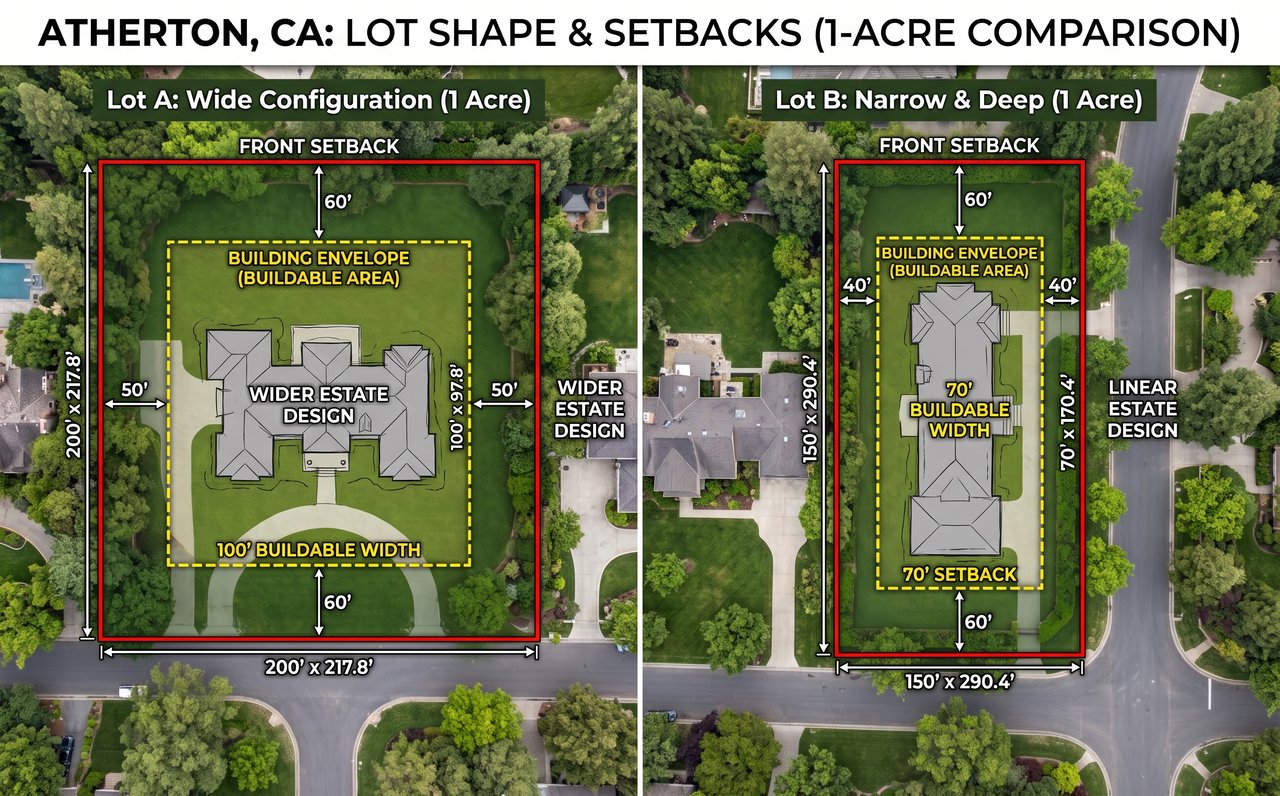
- Building setbacks and development restrictions.
- Property tax reassessment.
- Insurance availability and cost.
For buyers who intend to expand a residence, add an ADU, or rebuild, these considerations can materially affect the property's actual value.
An aggressive purchase offer should not be based on unverified assumptions about future construction rights.
11. How to Respond When the Seller Requests Your Highest and Best Offer
In a multiple-offer situation, a listing agent may ask interested buyers to submit their highest and best offers by a specified deadline.
That does not necessarily mean the seller will accept the highest price.
Instead, the seller may compare the complete financial and contractual terms of each offer.
Before responding, buyers should:
- Review the property's estimated market value.
- Confirm their maximum comfortable purchase price.
- Discuss financing and appraisal risks with their lender.
- Understand any proposed changes to contingencies.
- Consider the seller's preferred closing and possession terms.
- Ensure all required documentation is complete.
- Submit the strongest offer they can accept without undue financial pressure.
Buyers should also understand that the seller may accept another offer, issue counteroffers, or decline all offers.
No particular offer structure guarantees acceptance.
12. What If Your Offer Is Not Accepted?
Losing a multiple-offer situation can be disappointing, especially after spending significant time evaluating a property.
However, it does not necessarily mean that the buyer made a mistake.
Some competing buyers may have more cash, different financing arrangements, or greater willingness to accept contractual risks.
Those circumstances do not make their offer appropriate for every purchaser.
After an unsuccessful offer, buyers should review the experience with their real estate agent.
Questions worth considering include:
- Was our price supported by comparable sales?
- Were our financing documents sufficient?
- Did the seller favor different closing terms?
- Were any contractual terms unnecessarily restrictive?
- Would changing our strategy improve future offers without creating excessive risk?
There may also be opportunities to submit a backup offer if the seller is willing to consider one.
However, backup offers should be evaluated carefully because they may create contractual obligations if the primary transaction is canceled and the backup agreement becomes effective.
13. Understand California's Buyer Representation Requirements
California's buyer representation rules changed beginning January 1, 2025.
Under Assembly Bill 2992, a buyer and the buyer's real estate broker generally must execute a written buyer-broker representation agreement as soon as practicable, but no later than execution of the buyer's offer to purchase.
California regulations also establish a rebuttable presumption that obtaining the agreement before an agent shows property to the buyer is practicable.
The agreement should explain the services provided, compensation, when compensation becomes due, and the agreement's duration and termination provisions.
Real estate brokerage compensation is negotiable and is not established by law.
Buyers should understand their representation agreement, including any compensation obligations, before participating in competitive purchase negotiations.
For additional information, review the California Department of Real Estate's buyer representation guidance.
What Makes a Strong Offer in Menlo Park?
A competitive offer combines an appropriate purchase price with credible financing, clear contract terms, and an understanding of the seller's priorities.
Offer Component | Why It Matters |
|---|---|
Purchase price | Determines the seller's gross proceeds but must be considered alongside other terms. |
Earnest money deposit | Demonstrates financial commitment; contractual and legal rules govern potential loss or return. |
Financing documentation | Helps the seller evaluate the likelihood of successful closing. |
Appraisal protection | Determines how certain valuation-related financing risks are allocated. |
Inspection terms | Allocate the time and contractual protections available for property investigations. |
Closing date | May help accommodate the seller's financial or moving plans. |
Possession arrangements | Can address the seller's need for additional time after closing. |
Seller concessions | Affect the seller's estimated net proceeds. |
Each component should be evaluated in combination with the others.
The strongest offer is generally one that balances the seller's objectives with the buyer's financial limits and acceptable level of risk.
Frequently Asked Questions About Multiple Offers in Menlo Park
How much above asking price should I offer in Menlo Park?
There is no fixed percentage. The appropriate offer depends on recent comparable sales, property condition, pricing strategy, competing interest, and the buyer's financial circumstances. A property listed below expected market value may justify an above-asking offer, while an overpriced listing may not.
Is a 3% earnest money deposit required in California?
No. Earnest money deposits are negotiable. The 3% figure has significance under certain California residential liquidated damages rules but is not a mandatory deposit requirement.
Will I automatically lose my deposit if I cancel a purchase?
No. The outcome depends on the purchase agreement, applicable contingencies, the reason for cancellation, the parties' conduct, and California law. Deposit disputes may require escrow instructions, agreement between the parties, or legal resolution.
Should I waive the inspection contingency to win a bidding war?
Waiving an investigation contingency can increase risk. Buyers should carefully review available property information, consider additional inspections, and understand the contractual consequences before removing protections.
Does a cash offer always beat a financed offer?
No. Cash offers may reduce financing uncertainty, but sellers also evaluate price, closing date, contingencies, and other terms. A well-qualified financed offer may be more attractive overall.
Can I make an offer before selling my current home?
Yes, but the appropriate structure depends on your financing, available cash, and whether the purchase is contingent upon selling another property. Buyers should assess the risks of carrying multiple properties or failing to complete the replacement transaction.
Should I use an escalation clause in Menlo Park?
An escalation clause may be useful in certain circumstances but can introduce contractual ambiguity and reveal the buyer's maximum price. Its suitability should be evaluated before including it in an offer.
Final Thoughts: Winning a Multiple-Offer Situation Without Regret
Multiple-offer situations are a reality of buying desirable homes in Menlo Park and other competitive Silicon Valley communities.
However, successful buyers do not rely on aggressive pricing alone.
They prepare their financing, study comparable sales, evaluate property conditions, understand contractual risks, and structure offers that address the seller's priorities.
Just as importantly, they establish financial limits and remain willing to walk away when the price or terms become unreasonable.
The goal is not simply to have your offer accepted. It is to purchase a home that meets your needs at a price and under terms you can confidently accept.
Buy a Home in Menlo Park With Milad Real Estate
At Milad Real Estate, we assist buyers and sellers throughout Menlo Park, Atherton, Palo Alto, Los Altos, Redwood City, Woodside, and surrounding Silicon Valley communities.
As both a real estate broker and attorney, Aria Vatankhah brings experience in residential real estate transactions, contractual matters, property development, and land-use considerations.
Whether you are preparing to make an offer on your first home, purchasing a luxury residence, or evaluating an older property with redevelopment potential, Milad Real Estate can help you understand the market and assess the terms of a potential transaction.
Explore Menlo Park homes for sale or contact Milad Real Estate to schedule a homebuyer consultation.
Aria Vatankhah
Founder, Milad Real Estate
Real Estate Broker | Attorney at Law
DRE License No. 01892083
Phone: 650-799-8168
Email: [email protected]
Sources and additional information:California Department of Real Estate — Residential Contract Provisions and Disclosures; California Association of REALTORS® — Liquidated Damages Guide; California Department of Real Estate — Buyer Representation Changes; Menlo Park MLS-Based Housing Market Statistics.
Updated November 2026. Real estate market conditions change, and purchase agreements involve property-specific contractual obligations. Deposit requirements and rights to recover deposits depend on the transaction documents and applicable law. This article provides general real estate information and is not a substitute for individualized legal, lending, tax, or financial advice.