Whether you are purchasing your first home in Menlo Park, selling your current residence, or considering moving to a larger property, the decision involves much more than finding the right house.
For many buyers and homeowners, the most important question is financial: Is it better to buy or sell now, or should you wait for more favorable market conditions?
With Menlo Park home prices frequently reaching several million dollars, even relatively small changes in mortgage rates, purchase prices, property taxes, and transaction costs can have substantial financial consequences.
Some buyers hope home prices will decline. Others are waiting for lower mortgage rates. Existing homeowners may be reluctant to give up historically low mortgage rates, even when their current home no longer meets their needs.
Understanding these financial trade-offs is essential before making a decision.
What Does the Menlo Park Housing Market Look Like in 2026?
Menlo Park remains one of Silicon Valley's desirable residential communities, offering established neighborhoods, proximity to major employment centers, and convenient access to Palo Alto, Stanford University, and surrounding Peninsula communities.
According to MLS-based market data for January through September 2026, the median sale price for a single-family home in Menlo Park was approximately $3.58 million, representing an increase of approximately 8% compared with the same period in 2025.
During September 2026, Menlo Park recorded approximately 1.2 months of single-family housing inventory, reflecting relatively limited availability compared with the recent pace of sales.
However, the market differs considerably depending on the neighborhood, property type, lot characteristics, and price range.
A condominium or townhome may offer a lower entry price than a detached single-family residence, while larger properties in established neighborhoods may command substantial premiums.
Buyers and sellers should therefore focus on comparable properties rather than relying exclusively on citywide market averages.
1. Should You Buy a Menlo Park Home Now or Wait?
One of the most common questions among prospective homebuyers is whether delaying a purchase could result in a lower price or more favorable financing.
Two important factors influence this decision:
- Future home prices: Will the property you want become more or less expensive?
- Mortgage rates: Will borrowing costs increase or decrease?
However, neither factor can be predicted reliably.
Even if mortgage rates decline, increased buyer demand could create additional competition for desirable properties.
Conversely, if prices decline, the financial benefit may be offset by higher borrowing costs or reduced availability of suitable homes.
Rather than attempting to predict the perfect moment to purchase, buyers should evaluate whether a specific property is appropriately priced and financially manageable under current conditions.
2. How Mortgage Rates Affect the Cost of Buying a Home
Mortgage rates have a significant effect on monthly housing expenses.
According to Freddie Mac, the national average rate for a 30-year fixed mortgage was 7.24% as of October 29, 2026.
This is substantially higher than the exceptionally low mortgage rates available during 2020 and 2021.
However, the Freddie Mac survey primarily reflects conventional conforming mortgages. Buyers of higher-priced Menlo Park homes may require jumbo financing, which can have different rates and underwriting requirements.
Example: Purchasing a $2 Million Home in Menlo Park
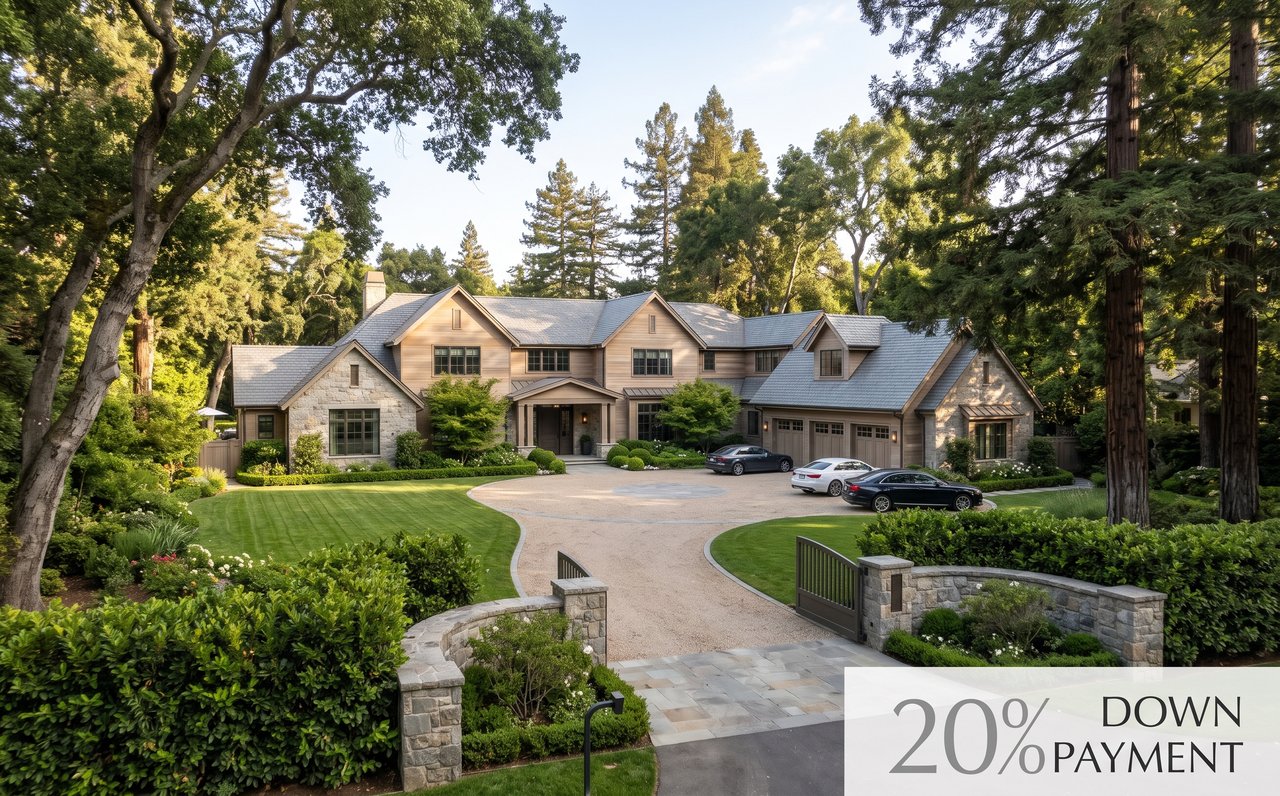
Assume a buyer purchases a home for $2 million with a 20% down payment.
- Purchase price: $2,000,000
- Down payment: $400,000
- Mortgage amount: $1,600,000
- Loan term: 30 years
Here is how different mortgage rates would affect the approximate monthly principal and interest payment:
Mortgage Rate | Monthly Principal and Interest |
|---|---|
7.24% | $10,904 |
6.24% | $9,841 |
A one-percentage-point difference in the mortgage rate would reduce the monthly principal and interest payment by approximately $1,063 in this example.
These calculations exclude property taxes, insurance, maintenance, mortgage-related fees, and other ownership expenses.
Although lower rates can substantially reduce monthly payments, buyers should not base a purchase on the assumption that refinancing will become available on more favorable terms.
3. What Happens If Home Prices Increase While You Wait?
Waiting to purchase can also affect the amount of cash required for a down payment.
Consider a hypothetical example involving a $2 million residence.
If the home's market value increases by 5% over the following year, the purchase price would rise to $2.1 million.
Financial Comparison | Purchase Today | Purchase After 5% Increase |
|---|---|---|
Purchase price | $2,000,000 | $2,100,000 |
20% down payment | $400,000 | $420,000 |
Mortgage amount | $1,600,000 | $1,680,000 |
Monthly principal and interest at 7.24% | $10,904 | $11,449 |
In this hypothetical scenario, waiting would require an additional $20,000 down payment and approximately $545 more in monthly principal and interest, assuming the same mortgage rate.
However, this example is not a forecast that Menlo Park home prices will increase by 5%.
If the property's price declines instead, the financial comparison could favor waiting.
Buyers must also consider the cost of renting while they wait, the returns available on their savings, transaction expenses, and the financial risks associated with ownership.
Likewise, an increase in a home's market value does not automatically represent an equivalent increase in the owner's net wealth, because ownership involves borrowing costs, taxes, maintenance, and transaction expenses.
4. How Much Money Do First-Time Homebuyers Need in Menlo Park?
Purchasing a first home in Menlo Park presents significant financial challenges because property prices are high compared with many other California communities.
Although a 20% down payment is common among some purchasers, it is not a universal requirement for every mortgage program.
Some eligible borrowers may qualify for conventional financing with a smaller down payment, although loan limits, mortgage insurance, underwriting requirements, and other restrictions apply.
For higher-priced properties, jumbo mortgage lenders may require substantial down payments or cash reserves.
First-time buyers should prepare for several categories of expenses:
- Down payment.
- Loan origination and underwriting charges.
- Escrow and title-related expenses.
- Property inspections and appraisal costs.
- Prepaid insurance and property tax adjustments.
- Moving and furnishing expenses.
- Emergency reserves and anticipated repairs.
Buyers should obtain mortgage preapproval and compare Loan Estimates from multiple lenders before deciding how much to spend.
For more information, visit the Consumer Financial Protection Bureau's homebuying resources.
5. Is Buying Better Than Renting in Menlo Park?
Buying a home can provide stability, greater control over the property, and the opportunity to accumulate equity over time.
However, homeownership is not automatically financially superior to renting.
Renters generally avoid many of the direct maintenance expenses, property taxes, and transaction costs associated with homeownership.
Purchasing may become more attractive for buyers who intend to remain in the same residence for an extended period and can comfortably afford the ownership expenses.
When comparing renting and buying, consider:
- Monthly rent versus total ownership costs.
- Down payment and closing expenses.
- Mortgage interest and principal repayment.
- Property taxes and insurance.
- Maintenance and renovation costs.
- Expected length of ownership.
- Potential home appreciation or depreciation.
- Alternative investment returns on funds not used for a down payment.
For high-priced Menlo Park properties, the difference between monthly rent and total ownership costs can be substantial.
Consequently, purchasing should be evaluated as both a financial commitment and a long-term housing decision.
6. What If You Already Own a Home in Menlo Park?
Existing homeowners face additional considerations when deciding whether to sell and purchase another residence.
Many homeowners who purchased properties several years ago have accumulated equity through mortgage principal payments and increases in property value.
That equity may provide a substantial down payment toward a larger or more desirable home.
However, homeowners who currently have low-interest mortgages should carefully evaluate the cost of replacing their existing financing.
For example, a homeowner with a mortgage rate below 4% may experience a substantial increase in monthly payments if purchasing a replacement residence using a new loan at current rates.
The decision should consider not only the potential sale proceeds but also the cost of the new property, available financing, transaction expenses, and future ownership costs.
7. How Much Equity Do You Have in Your Menlo Park Home?
Home equity generally represents the difference between a property's current market value and the outstanding debt secured by the property.
For example, consider a homeowner whose residence has an estimated market value of $3 million and an outstanding mortgage balance of $1 million.
Item | Amount |
|---|---|
Estimated property value | $3,000,000 |
Outstanding mortgage balance | $1,000,000 |
Estimated equity before selling costs | $2,000,000 |
However, the homeowner would not necessarily receive $2 million in cash after selling.
Brokerage compensation, escrow charges, transfer taxes, mortgage payoff adjustments, negotiated concessions, and other transaction expenses may reduce the final proceeds.
For sellers considering a replacement purchase, estimating actual net proceeds is more useful than relying exclusively on a home's estimated market value.
Visit our property valuation page to learn more about evaluating your home's market position.
8. What Are the Costs of Selling a Home in Menlo Park?
Selling a property involves expenses that should be considered before deciding whether to move.
Potential expenses include:
- Negotiated real estate brokerage compensation.
- Title, escrow, recording, and applicable transfer-related charges.
- Pre-listing inspections.
- Repairs and property preparation.
- Professional staging and marketing expenses.
- Mortgage payoff balances and related charges.
- Negotiated buyer concessions.
- Potential income tax consequences.
Real estate commissions are negotiable and are not fixed by California law.
The allocation of transaction expenses should be clearly addressed in the applicable agreements.
Homeowners should also evaluate potential federal and California income tax consequences, including whether they qualify for the principal residence capital gains exclusion.
The tax treatment of an individual sale depends on ownership, use, filing status, basis, improvements, and other circumstances.
A preliminary seller net-proceeds estimate can help homeowners understand the amount of equity potentially available for their next purchase.
9. How Proposition 19 Can Affect Your Decision to Move
California Proposition 19 provides an important potential property tax benefit to certain homeowners purchasing a replacement principal residence.
Eligible homeowners who are at least 55 years old, severely disabled, or affected by qualifying wildfire or natural disaster circumstances may be able to transfer their existing property tax base to a replacement residence in California.
For qualifying homeowners, the ability to transfer an existing taxable value can reduce the property tax consequences of moving.
However, the replacement property's value and the timing of the transaction matter.
When a replacement residence exceeds the applicable equal-or-lesser-value threshold, the excess value is generally added to the transferred taxable value.
Proposition 19 does not automatically allow homeowners to purchase a significantly more expensive residence while keeping exactly the same property tax assessment.
Eligibility requirements, qualifying transaction dates, and the number of permitted transfers should be evaluated carefully.
For additional information, visit the California State Board of Equalization's Proposition 19 resources.
10. Why Neighborhood and Property Characteristics Matter in Menlo Park
Menlo Park is not a single uniform real estate market.
Home values differ substantially between neighborhoods based on location, lot size, property condition, architectural design, and buyer preferences.
Neighborhoods such as Central Menlo, Allied Arts, Sharon Heights, the Willows, and Belle Haven offer different combinations of housing styles, price ranges, transportation access, and residential environments.
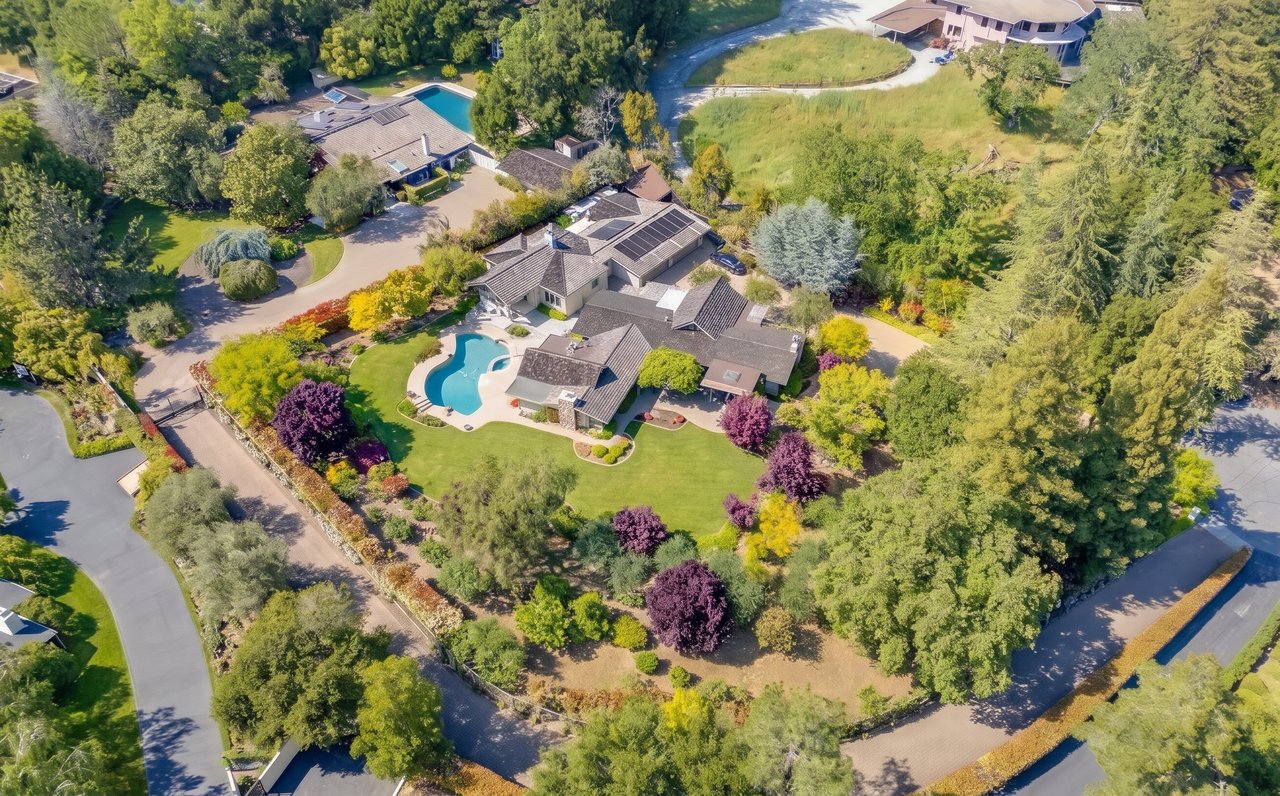
In certain Menlo Park neighborhoods, underlying land value can represent a substantial portion of the property's overall worth.
For example, an older residence on a desirable lot may appeal to purchasers interested in renovation or rebuilding.
However, lot size alone does not establish development potential.
Buyers should evaluate:
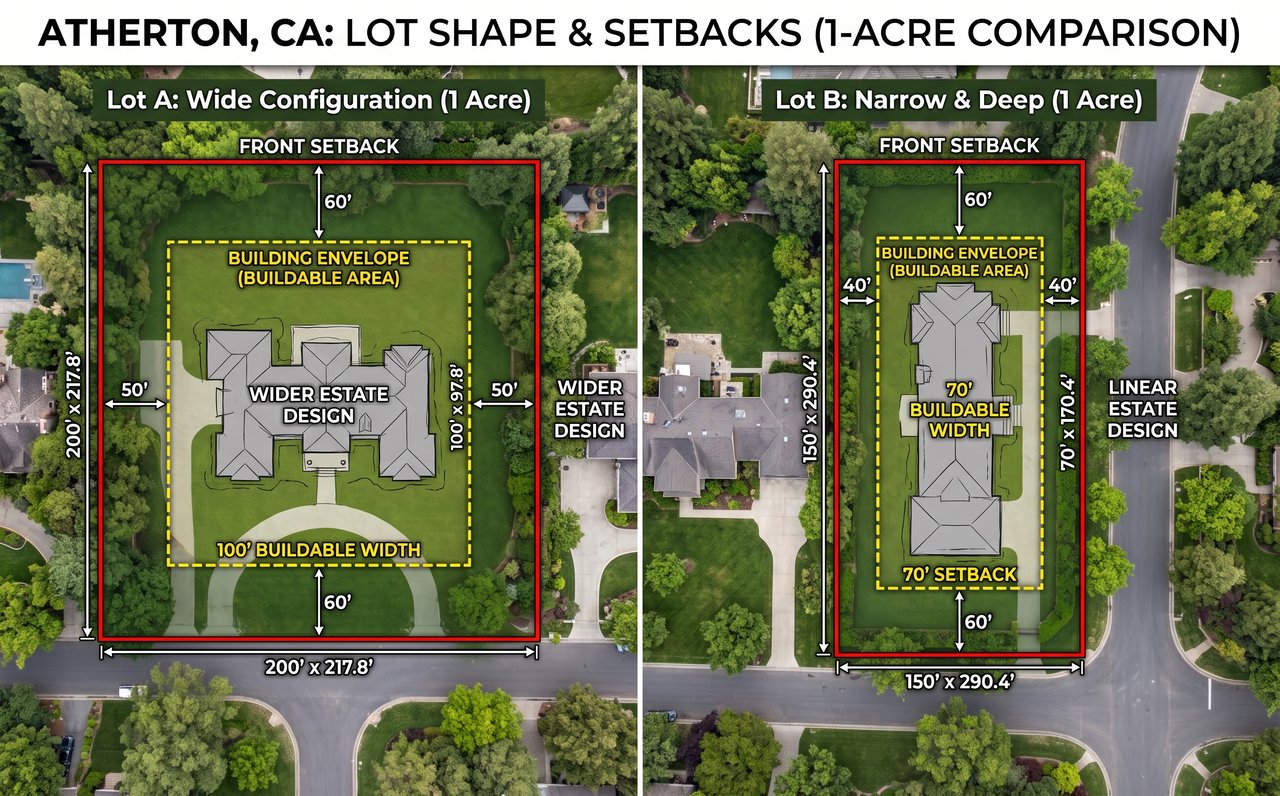
- Lot shape and usable area.
- Required setbacks.
- Floor area and building height restrictions.
- Protected trees.
- Utility and access easements.
- Existing permit records.
- Potential for additions, ADUs, or qualifying redevelopment.
These considerations can significantly affect the price buyers are willing to pay and the costs associated with future improvements.
Buyers can explore current opportunities through Menlo Park homes for sale.
11. Should You Buy New Construction or an Existing Home?
Another important financial consideration involves choosing between newly constructed homes and older residential properties.
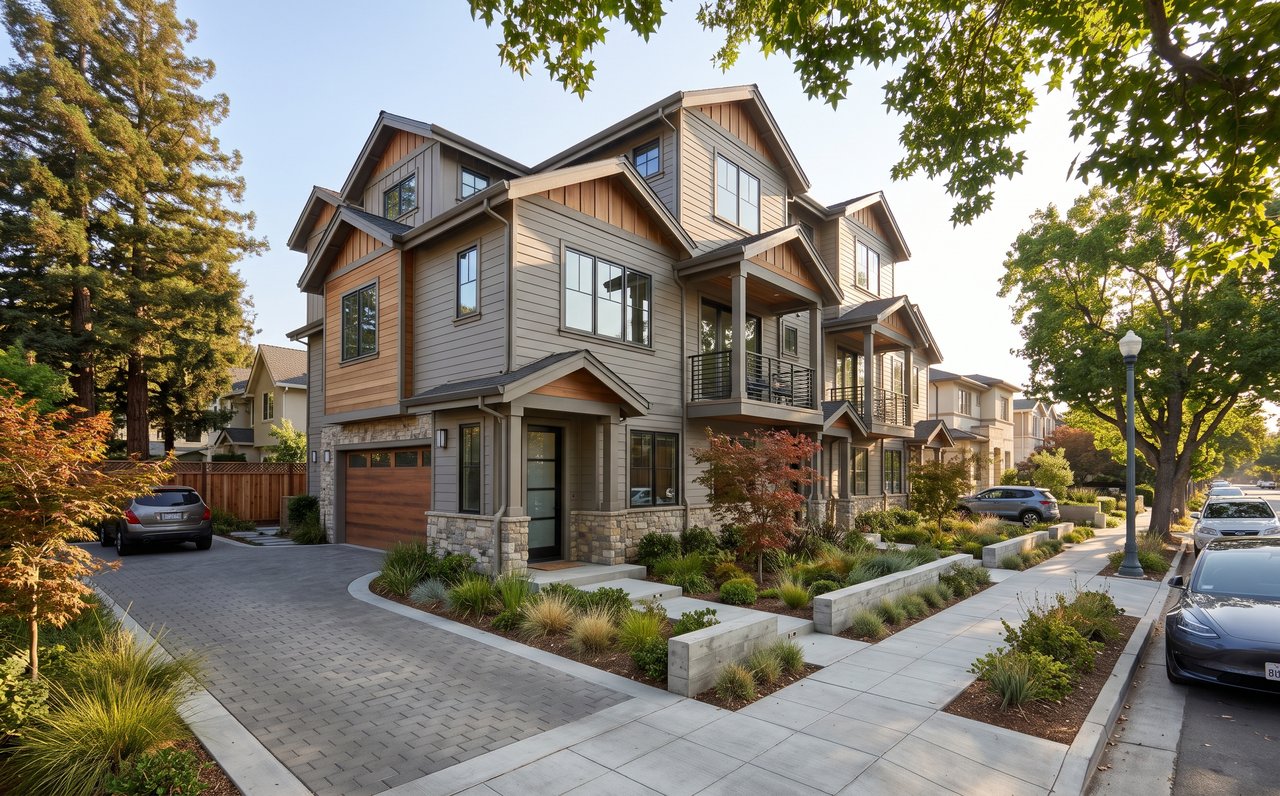
New construction often provides modern floor plans, energy-efficient systems, contemporary finishes, and fewer immediate renovation requirements.
However, newly constructed residences may command substantial premiums reflecting land acquisition, construction costs, architectural design, and developer expenses.
Older homes may offer lower acquisition prices or opportunities for improvements, but renovation and maintenance expenses must be considered.
For buyers evaluating older properties, important questions include:
- What is the condition of the roof, foundation, plumbing, and electrical systems?
- Were past additions and renovations properly permitted?
- How much would necessary improvements cost?
- Are there restrictions affecting expansion or redevelopment?
- How would the total acquisition and renovation cost compare with purchasing a completed home?
Buying an older property and remodeling it may be financially attractive in some circumstances, but it can also involve construction delays, unexpected expenses, and permitting complexity.
Neither new construction nor an existing residence is automatically the better financial choice.
12. When Does Waiting to Buy or Sell Make Financial Sense?
Waiting may be appropriate when a purchase or sale would create unnecessary financial pressure.
For buyers, reasons to postpone a purchase may include:
- Insufficient savings for the down payment and closing costs.
- Uncertain employment or income.
- Monthly ownership costs that exceed a comfortable budget.
- Plans to relocate within a relatively short period.
- Limited available properties that meet essential requirements.
For sellers, waiting may make sense when the property requires preparation, market conditions are unfavorable for the particular home, or a replacement residence has not yet been identified.
However, waiting solely because of a prediction that mortgage rates will decline or home values will increase involves uncertainty.
The more important question is whether the proposed transaction makes financial sense under realistic current assumptions.
13. How to Compare Buying Now With Waiting One Year
Before making a decision, buyers can develop a simple financial comparison using several scenarios.
Rather than assuming that mortgage rates and home prices will move in one direction, evaluate what happens under different conditions.
Scenario | Potential Effect |
|---|---|
Home prices increase and rates remain unchanged | Higher purchase price, down payment, and mortgage payments |
Home prices increase and rates decline | Higher purchase price may be partly offset by lower financing costs |
Home prices decline and rates remain unchanged | Lower purchase price and potentially lower borrowing needs |
Home prices decline and rates increase | Purchase price savings may be offset by higher borrowing costs |
A complete comparison should also account for the cost of renting while waiting, expected ownership expenses, transaction costs, cash reserves, and the potential return on funds that remain invested elsewhere.
This approach provides a more realistic basis for decision-making than relying on a single forecast.
Frequently Asked Questions About Buying or Selling a Home in Menlo Park
Is 2026 a good time to buy a house in Menlo Park?
Whether 2026 is a good time to buy depends on the buyer's finances, available properties, and long-term goals. Buyers should evaluate current mortgage terms, comparable sales, and total ownership costs rather than assume prices or rates will move in a particular direction.
What is the median home price in Menlo Park?
MLS-based data for January through September 2026 indicates a median single-family home sale price of approximately $3.58 million. Individual property values vary substantially by neighborhood, lot size, condition, and property type.
Should I sell my current Menlo Park home before buying another?
Selling first may provide certainty about available equity and reduce the risk of carrying two properties. Buying first may provide greater flexibility when selecting a replacement residence but can require additional financing or substantial liquid assets.
Will mortgage rates decline in 2027?
Future mortgage rates cannot be predicted with certainty. Buyers should evaluate financing based on available loan terms and avoid depending on future refinancing to make a purchase affordable.
Can I transfer my property tax base when buying another home?
Some qualifying California homeowners may be eligible for a property tax base transfer under Proposition 19. Eligibility, timing, and replacement property values affect the outcome.
Is new construction a better investment than an older home?
Not necessarily. New construction may offer modern features and fewer immediate repairs, while older homes may provide attractive land value or renovation opportunities. The appropriate choice depends on acquisition price, property condition, construction costs, and long-term objectives.
What should I do before selling my Menlo Park home?
Begin with a property-specific market analysis, estimate your likely net proceeds, evaluate necessary preparation, and consider the financial implications of your next housing decision.
Final Thoughts: Making the Right Financial Decision in Menlo Park
Buying your first home, selling an existing residence, or moving to a larger property in Menlo Park involves several important financial considerations.
Mortgage rates and home prices matter, but they are only part of the equation.
Down payments, equity, transaction costs, property taxes, maintenance expenses, and the expected length of ownership can all influence the financial outcome.
For existing homeowners, the decision may also involve balancing substantial accumulated equity against the cost of replacing an older, low-interest mortgage.
For first-time buyers, the most important consideration is whether the purchase is affordable and consistent with long-term financial goals.
The right time to buy or sell is not necessarily when home prices or mortgage rates reach a particular level. It is when the transaction makes financial sense for your individual circumstances and the property is appropriately valued.
Buy or Sell Your Menlo Park Home With Milad Real Estate
At Milad Real Estate, we assist buyers and sellers throughout Menlo Park, Palo Alto, Atherton, Los Altos, Redwood City, Woodside, Portola Valley, and surrounding Silicon Valley communities.
As both a real estate broker and attorney, Aria Vatankhah brings experience in residential real estate transactions, contractual matters, property development, and land-use considerations.
Whether you are purchasing your first Menlo Park home, evaluating an older property with redevelopment potential, or preparing to sell your current residence, understanding the property's market value and financial implications is an important first step.
Explore Menlo Park homes for sale, visit our property valuation page, or contact Milad Real Estate to discuss your goals.
Aria Vatankhah
Founder, Milad Real Estate
Real Estate Broker | Attorney at Law
DRE License No. 01892083
Phone: 650-799-8168
Email: [email protected]
Sources:MLSListings — Menlo Park Real Estate Market; Freddie Mac — Mortgage Rate Survey; Consumer Financial Protection Bureau — Comparing Loan Estimates; California State Board of Equalization — Proposition 19.
Updated November 2026. Housing market data reflects the reporting periods indicated. Mortgage calculations are illustrative and exclude taxes, insurance, fees, and other ownership costs. Future home prices and mortgage rates are uncertain. This article provides general real estate information and does not constitute individualized legal, tax, lending, or financial advice.