One of the most common questions among prospective Silicon Valley homebuyers is whether they should purchase a home now or wait for a more favorable housing market.
In Palo Alto, where single-family homes frequently sell for several million dollars, choosing when to buy can have substantial financial consequences.
Some buyers hope mortgage rates will decline. Others believe home prices may fall or that additional properties will become available. Meanwhile, buyers who find a home that meets their needs may worry about missing an opportunity if they postpone their purchase.
So, should you buy a home in Palo Alto in 2026, or would waiting be a better financial decision?
The answer depends on your financial circumstances, the type of property you want, and how long you plan to own it. Understanding current market conditions can help you make a more informed decision.
What Does the Palo Alto Housing Market Look Like in 2026?
Palo Alto remains one of Silicon Valley's most desirable residential communities, supported by its proximity to Stanford University, established technology companies, employment centers, and distinctive residential neighborhoods.
According to MLSListings-based market statistics covering January through October 2026, the median sale price for single-family homes in Palo Alto was approximately $4.12 million.
During October 2026, Palo Alto recorded 57 closed residential sales across property types, with a median sale price of approximately $3.30 million and a median of nine days on market.
The difference between these median prices reflects the types of properties included. Condominiums and townhomes generally sell for considerably less than detached single-family homes.
The October market also recorded a sale-to-final-list-price ratio of approximately 105.6%, indicating that many properties sold above their final asking prices.
These statistics show that buyer competition remains meaningful, although market conditions vary by neighborhood, price range, property type, and condition.
For buyers considering Palo Alto homes for sale, reviewing comparable sales for the specific type of property they want is more useful than relying exclusively on citywide averages.
1. Will Palo Alto Home Prices Fall If You Wait?
Predicting short-term housing prices is difficult, particularly in a relatively small and expensive market like Palo Alto.
Property values are influenced by several factors, including mortgage rates, available inventory, employment conditions, stock market performance, and buyer confidence.
In Silicon Valley, compensation linked to technology company equity can also influence purchasing power.
Although economic uncertainty can cause some buyers to postpone purchases, Palo Alto has several characteristics that continue to support residential demand.
These include its location near major employers, established neighborhoods, limited availability of residential land, and convenient access to Stanford University and surrounding communities.
However, these characteristics do not guarantee that home prices will increase every year.
Individual properties may experience price reductions, longer marketing periods, or fluctuations in value even when the broader market remains competitive.
For buyers, the important question is not simply whether Palo Alto prices might decline, but whether a particular property is appropriately priced relative to comparable homes.
2. Should You Wait for Mortgage Rates to Decline?
Mortgage rates are another important consideration when deciding whether to purchase a home.
During 2020 and 2021, historically low mortgage rates encouraged many buyers to enter the housing market.
By 2026, borrowing costs had increased substantially.
According to Freddie Mac, the national average interest rate for a 30-year fixed-rate mortgage was 7.24% as of October 29, 2026.
Higher mortgage rates increase monthly payments and reduce purchasing power for buyers financing their purchases.
However, waiting for lower rates involves uncertainty. Mortgage rates could decline, remain elevated, or increase.
Even if interest rates fall, more buyers may enter the market, potentially increasing competition for desirable properties.
How Much Difference Can Mortgage Rates Make?
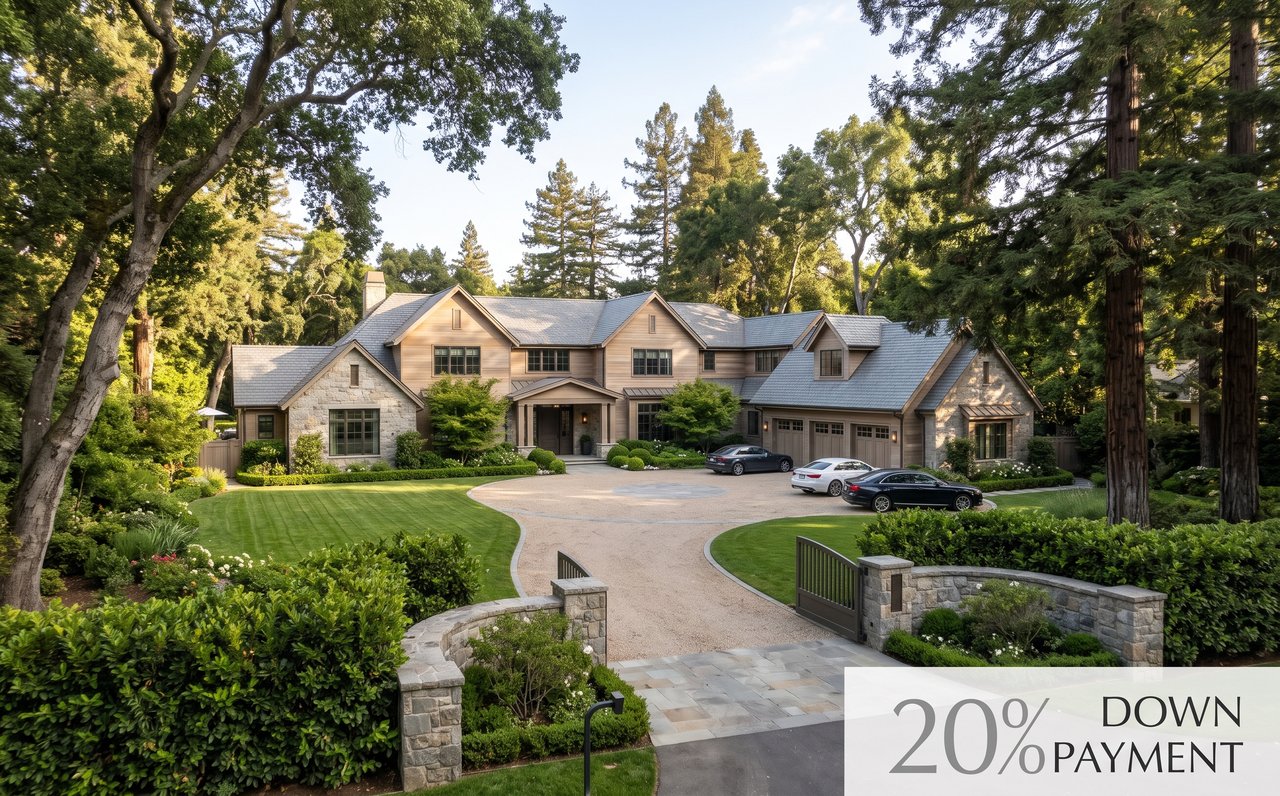
Consider a buyer purchasing a $3 million home with a 20% down payment.
The mortgage amount would be $2.4 million.
Interest Rate | Approximate Monthly Principal & Interest |
|---|---|
7.25% | $16,372 |
6.25% | $14,778 |
5.25% | $13,253 |
These examples assume a 30-year fixed-rate mortgage and exclude property taxes, insurance, maintenance, and other ownership expenses.
A two-percentage-point reduction in the interest rate could reduce principal and interest payments by approximately $3,100 per month on this loan.
However, whether waiting is beneficial also depends on what happens to property prices, financing terms, and the availability of suitable homes.
Buyers should compare actual lender quotes and evaluate whether they can comfortably afford the property under current conditions rather than relying on future refinancing opportunities.
3. Why Limited Housing Inventory Matters in Palo Alto
One reason Palo Alto remains competitive is that the supply of available homes is relatively limited.
Much of the city is already developed, and established residential neighborhoods provide relatively few opportunities for large-scale construction of additional single-family homes.
Properties in desirable locations may attract considerable attention when they become available.
However, limited inventory does not mean that every property will receive multiple offers or sell above its asking price.
Homes with significant maintenance problems, functional limitations, unfavorable locations, or unrealistic asking prices may require longer marketing periods.
For buyers who are prepared financially, these differences can create opportunities to negotiate more favorable terms.
Waiting may make sense if available properties do not meet your needs, but waiting solely for a dramatic market decline carries uncertainty.
4. Should You Buy Now If You Already Own a Home?
For existing homeowners, deciding whether to move involves additional financial considerations.
Owners who purchased their properties several years ago may have accumulated substantial equity through mortgage payments and property appreciation.
That equity can potentially provide a larger down payment toward a replacement residence.
However, homeowners should also consider the financial consequences of replacing an existing low-interest mortgage with a new loan at a higher rate.
For example, a homeowner with a mortgage rate below 4% may face a significantly higher monthly payment after purchasing a more expensive residence, even with substantial equity available.
Before upgrading, homeowners should compare the expected proceeds from selling their current home with the complete ownership costs of the replacement property.
5. How Proposition 19 Can Benefit Eligible California Homeowners
California Proposition 19 can provide an important property tax benefit to certain homeowners purchasing a replacement principal residence.
Under Proposition 19, qualifying homeowners who are at least 55 years old, severely disabled, or whose principal residence was substantially damaged or destroyed by qualifying wildfire or natural disaster may be eligible to transfer their existing property tax base to a replacement principal residence anywhere in California.
Eligibility requirements and limitations vary by category.
For qualifying homeowners aged 55 or older and qualifying severely disabled homeowners, the transfer may be available up to three times.
A replacement home may be more expensive than the original residence, but the property tax calculation must account for the difference in market value when the replacement exceeds the applicable equal-or-lesser-value threshold.
Example of a Proposition 19 Property Tax Transfer
Consider a qualifying homeowner who sells a principal residence for $2 million and purchases a replacement home for $2.5 million within the first year after the sale.
Assume the original home's factored taxable value is $600,000.
Under the applicable first-year comparison, 105% of the original home's market value equals $2.1 million.
The replacement property's value exceeds that threshold by $400,000.
Subject to all applicable requirements, the replacement home's adjusted taxable value would therefore be approximately $1 million: the transferred $600,000 taxable value plus the $400,000 excess.
This may represent substantial property tax savings compared with reassessing the replacement residence entirely at its $2.5 million purchase price.
However, the outcome depends on the applicable facts, dates, eligibility requirements, and county assessor's determination.
Homeowners considering a move should review the California State Board of Equalization's Proposition 19 guidance before making decisions based on anticipated property tax savings.
6. Is Palo Alto a Good Place for First-Time Homebuyers?
Buying a first home in Palo Alto presents unique challenges because property prices are substantially higher than in many other California communities.
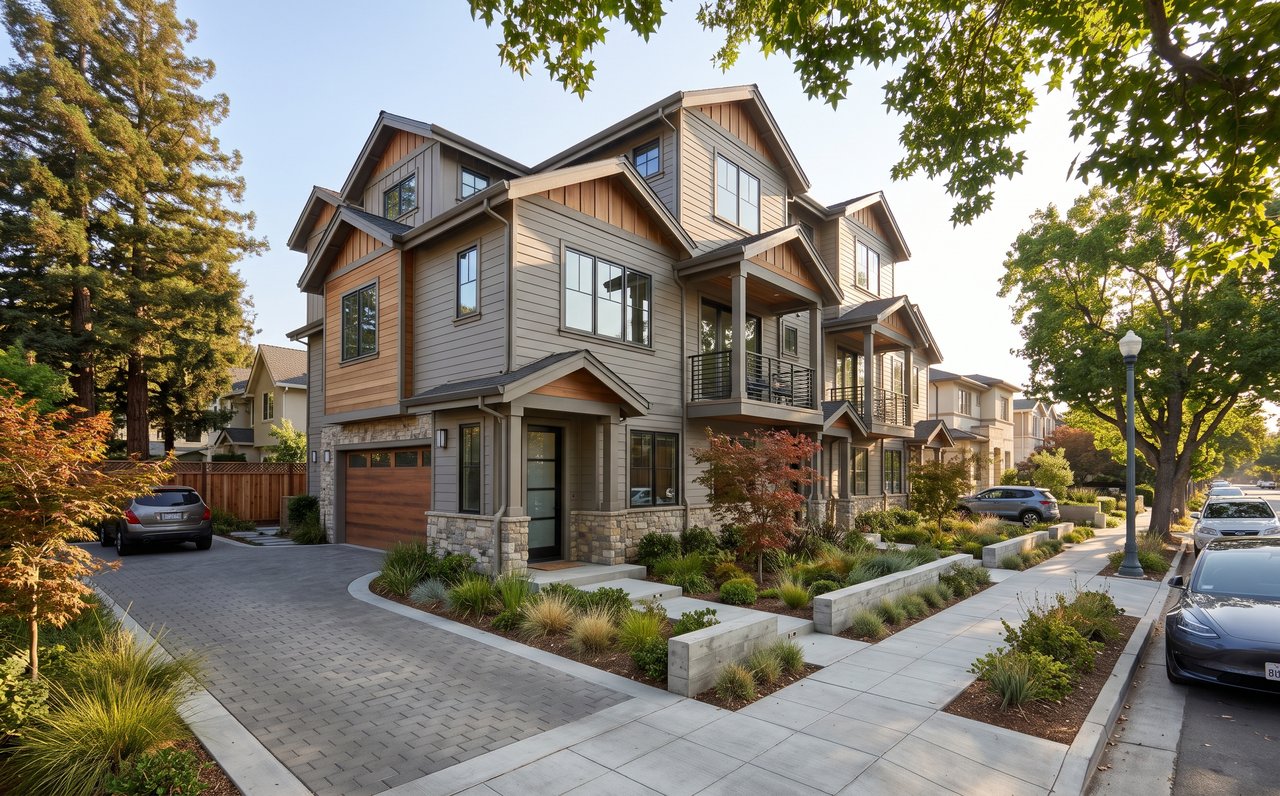
Nevertheless, first-time buyers may find opportunities among condominiums, townhomes, and smaller single-family residences.
According to MLSListings-based sales data for January through October 2026, Palo Alto's median condominium sale price was approximately $1.38 million, compared with approximately $4.12 million for single-family homes.
Although condominium ownership involves HOA fees and shared maintenance obligations, it can provide a lower-priced entry into the Palo Alto market.
First-time buyers should carefully evaluate:
- Available down payment funds.
- Mortgage qualification and interest rates.
- Monthly principal and interest payments.
- Property taxes and homeowners insurance.
- HOA fees and special assessments, when applicable.
- Maintenance and future improvement expenses.
- Expected length of ownership.
Buyers should also consider whether a neighboring community might offer a property that better fits their financial and lifestyle requirements.
For example, housing options in Menlo Park, Mountain View, Redwood City, and other nearby communities differ in price, location, and property characteristics.
7. Should You Consider Palo Alto Hills and Foothill Properties?
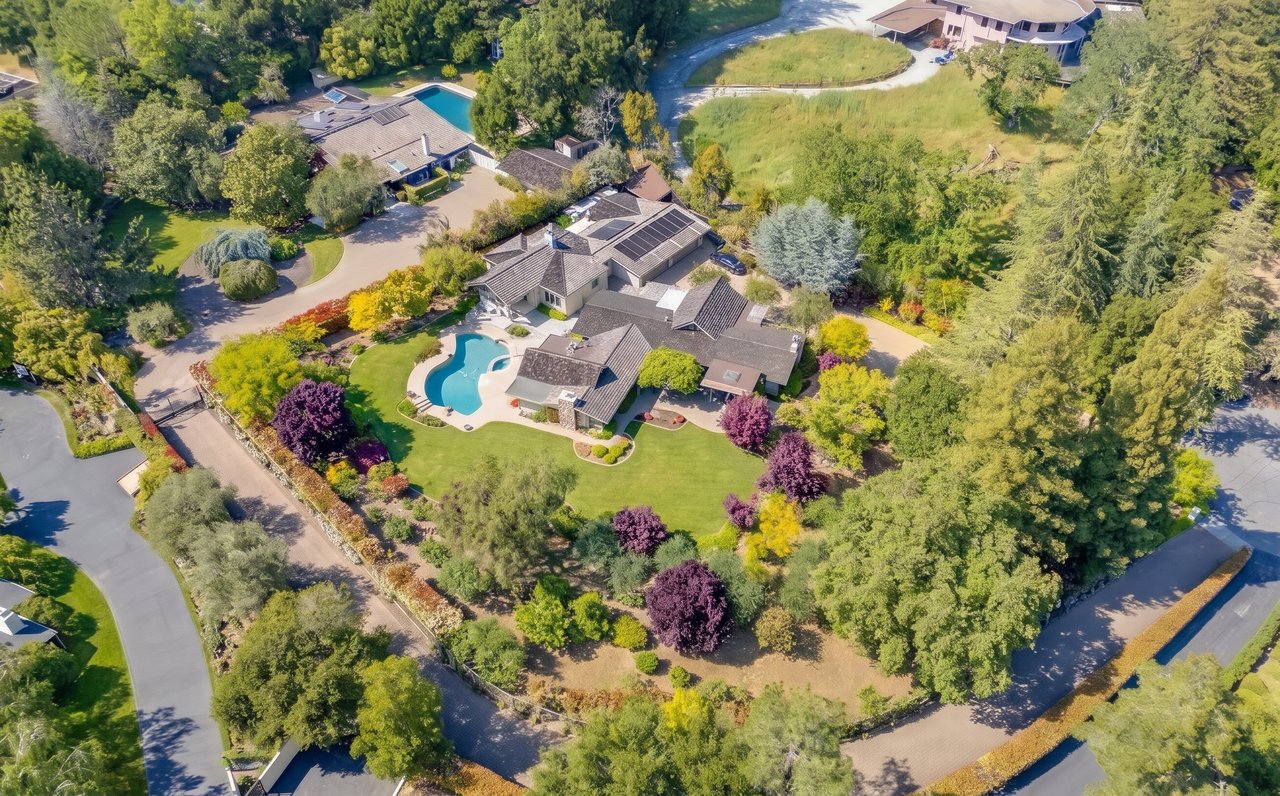
For buyers seeking greater privacy, larger residential lots, and access to outdoor recreation, the foothill areas of Palo Alto deserve consideration.
Properties near the Palo Alto Hills Golf & Country Club and the Pearson-Arastradero Preserve may offer a different residential environment from neighborhoods closer to Downtown Palo Alto.
These areas can appeal to buyers who prefer a quieter setting, natural surroundings, and opportunities for hiking and outdoor activities.
However, foothill properties may involve additional considerations, including:
- Topography and grading conditions.
- Driveway access and road conditions.
- Fire hazard exposure and insurance availability.
- Drainage and soil conditions.
- Tree protection and landscape maintenance.
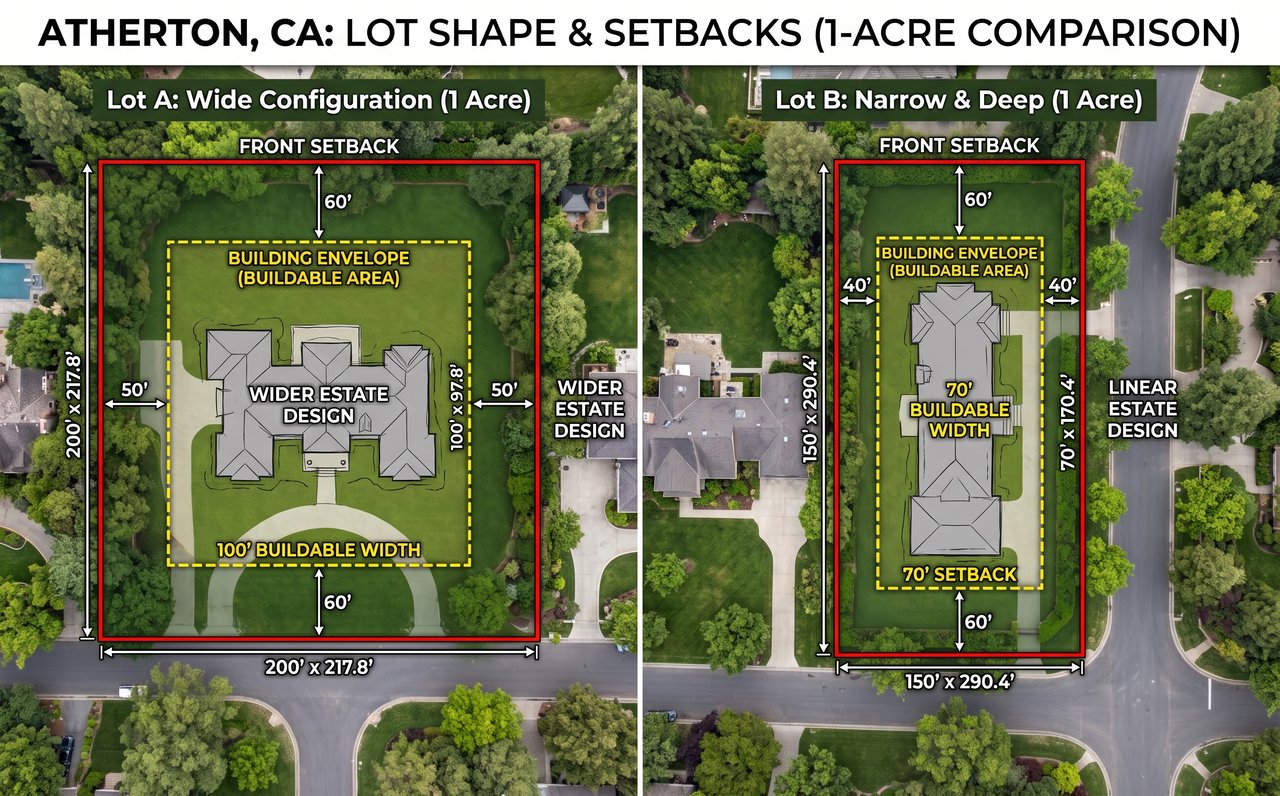
- Setbacks, easements, and development restrictions.
Buyers should evaluate these property-specific issues carefully before purchasing.
A large lot or attractive view does not automatically mean that a property has greater usable building area or fewer development limitations.
8. Is It Better to Buy an Older Home or New Construction in Palo Alto?
Another important decision involves choosing between an existing residence and a newly constructed home.
New construction often provides modern layouts, improved energy efficiency, contemporary building systems, and finishes that appeal to today's buyers.
However, new homes generally command premiums that reflect land acquisition, construction costs, design, and developer expectations.
Older homes may offer opportunities for renovation, expansion, or redevelopment, particularly when they are situated on desirable lots.
When comparing properties, buyers should evaluate:
- The condition and remaining useful life of major building systems.
- Whether additions or renovations were properly permitted.
- Estimated remodeling or construction expenses.
- Lot dimensions and development restrictions.
- Future maintenance requirements.
- Recent comparable sales of both renovated and newly constructed homes.
For some buyers, purchasing an older home at an appropriate price and renovating it gradually may be attractive.
For others, the convenience and predictability of a completed residence may justify paying more.
9. When Does Waiting to Buy a Palo Alto Home Make Sense?
Although Palo Alto remains a desirable real estate market, purchasing immediately is not always the right decision.
Waiting may be appropriate when:
- Your finances are not ready: You need additional savings for the down payment, closing costs, or emergency reserves.
- The monthly payment is uncomfortable: Purchasing would require taking on more debt than you can reasonably manage.
- Your employment situation is uncertain: A potential job change, relocation, or income reduction could affect your ability to carry the mortgage.
- You expect to move relatively soon: Transaction costs and potential market fluctuations may outweigh the benefits of short-term ownership.
- Available properties do not meet your needs: Waiting for a suitable home may be more sensible than compromising on important requirements.
- You need additional time for research: Understanding neighborhoods, financing, inspections, and property values can improve your purchasing decision.
The decision should be based on your financial readiness and purchasing objectives, not simply on a prediction about the direction of the housing market.
10. When Might Buying Now Be the Better Choice?
Buying now may make sense when you have stable income, sufficient cash reserves, appropriate financing, and a clear understanding of your long-term housing needs.
Other favorable circumstances may include finding a property in a desirable location at a reasonable price, having a substantial down payment, or planning to remain in the home for many years.
Buyers who are financially prepared may also be able to negotiate effectively when a property has remained on the market longer than comparable homes.
However, the asking price should not be the sole consideration.
An informed purchase decision should include an assessment of property condition, comparable sales, potential repairs, and expected ownership expenses.
11. How to Make a Competitive Offer Without Overpaying
In a market like Palo Alto, desirable homes may still attract multiple buyers.
However, making a competitive offer does not necessarily require offering the highest possible price.
A well-prepared buyer should first evaluate the property's market value using relevant comparable transactions.
Important steps include:
- Obtain mortgage preapproval or confirm available funds.
- Review comparable closed sales in the property's neighborhood.
- Evaluate the property's condition and available inspection reports.
- Understand seller disclosures and potential repair expenses.
- Review title information, easements, and relevant property restrictions.
- Evaluate contractual contingencies and associated risks.
- Prepare an offer consistent with your financial limits and purchasing objectives.
Buyers should understand the consequences of shortening or waiving contingencies, especially those involving financing, appraisal, and property investigations.
The objective is to purchase the right property under terms you can reasonably accept, rather than winning a bidding competition at any cost.
Frequently Asked Questions About Buying a Home in Palo Alto
Will Palo Alto home prices decline in 2027?
There is no reliable way to predict the exact direction of Palo Alto home prices in 2027. Values will depend on housing inventory, mortgage rates, economic conditions, and buyer demand. Individual neighborhoods and property types may perform differently.
What is the median single-family home price in Palo Alto?
Based on MLSListings-derived closed-sale data for January through October 2026, the median single-family home sale price was approximately $4.12 million.
Is it better to wait for mortgage rates to fall?
Waiting could reduce borrowing costs if mortgage rates decline, but buyers may also face changes in home prices and competition. The appropriate decision depends on affordability, financial stability, and the suitability of available properties.
Can Proposition 19 help me buy a more expensive home?
Eligible California homeowners may be able to transfer their existing property tax base to a more expensive replacement principal residence. However, the portion exceeding the applicable value threshold is generally added to the transferred taxable value.
Are Palo Alto condos a good alternative to single-family homes?
Condominiums may provide a lower-priced ownership option, particularly for first-time buyers and downsizers. However, buyers should evaluate HOA fees, association reserves, special assessments, financing eligibility, and resale potential.
How long should I plan to own a home in Palo Alto?
There is no universal minimum holding period. However, buyers expecting to remain in a property for several years may have more time to absorb transaction costs and market fluctuations than those planning to sell shortly after purchasing.
Final Thoughts: Should You Buy a Home in Palo Alto Now or Wait?
Deciding whether to buy a home in Palo Alto in 2026 requires more than predicting the direction of home prices or mortgage rates.
Palo Alto continues to offer attractive residential neighborhoods, proximity to major Silicon Valley employers, and limited availability of developable land.
However, these advantages must be weighed against high purchase prices, financing costs, property taxes, insurance, and maintenance expenses.
For buyers who are financially prepared, find a suitable home, and plan to remain in the community for an extended period, purchasing may make sense even when mortgage rates are elevated.
For buyers who need more savings, face uncertain employment circumstances, or cannot find a property that meets their needs, waiting may be the more appropriate choice.
The best time to buy a home is not necessarily when the market reaches its lowest price. It is when you find the right property at a price and ownership cost that fit your financial circumstances and long-term goals.
Explore Palo Alto Real Estate With Milad Real Estate
At Milad Real Estate, we help buyers and sellers navigate real estate transactions throughout Palo Alto, Menlo Park, Atherton, Los Altos, Woodside, and surrounding Silicon Valley communities.
As both a real estate broker and attorney, Aria Vatankhah brings experience in property transactions, contractual matters, and real estate development considerations.
Whether you are purchasing your first home, moving to a larger residence, or evaluating a property's long-term value, Milad Real Estate can help you understand local market conditions and assess available opportunities.
Explore Palo Alto homes for sale or visit Milad Real Estate to learn more.
Aria Vatankhah
Founder, Milad Real Estate
Real Estate Broker | Attorney at Law
Phone: 650-799-8168
Email: [email protected]
Sources: Palo Alto MLSListings-Based Housing Market Statistics; Freddie Mac — Primary Mortgage Market Survey; California State Board of Equalization — Proposition 19; Consumer Financial Protection Bureau — Buying a Home.
Updated November 2026. Housing market statistics reflect the periods indicated and may change. Mortgage payment examples are illustrative and exclude taxes, insurance, and other expenses. This article provides general real estate information and does not constitute individualized financial, tax, lending, or legal advice.