Stanford University is one of the world's leading academic and research institutions, attracting faculty members, researchers, entrepreneurs, technology professionals, and families from around the world. For many homebuyers, living near Stanford offers an exceptional combination of educational opportunities, Silicon Valley employment, desirable residential neighborhoods, and convenient access to the San Francisco Peninsula.
But how can you buy a house near Stanford University, and which neighborhoods should you consider?
The answer depends partly on whether you are eligible for Stanford's faculty and staff housing programs or plan to purchase a privately owned property in a surrounding community.
While certain homes on Stanford University's campus are subject to special ownership and eligibility restrictions, nearby neighborhoods in Palo Alto and Menlo Park offer opportunities for buyers who are not affiliated with the university.
This guide explains your options, identifies neighborhoods near Stanford, and outlines important considerations before purchasing a home.
Can You Buy a House on Stanford University's Campus?
Yes, but purchasing a home on Stanford University's campus is different from buying a conventional residential property.
Stanford owns the land underlying its campus residential properties. Eligible university employees may purchase a long-term leasehold interest in a home rather than acquiring fee-simple ownership of the underlying land.
According to Stanford Faculty Staff Housing, residential leasehold properties include single-family homes, townhouses, and condominiums. Stanford offers residential ground leases and restricted residential ground leases, each governed by specific contractual requirements.
Eligibility depends on employment classification and the particular housing program. Not all Stanford employees qualify for every purchasing opportunity.
Prospective buyers should verify their eligibility directly with Stanford Faculty Staff Housing before pursuing an on-campus property.
What Is a Stanford Ground Lease?
A ground lease is an arrangement under which a buyer acquires a leasehold interest in residential property while Stanford retains ownership of the underlying land.
Unlike conventional fee-simple ownership, the leasehold interest is governed by contractual provisions that may address:
- Eligibility to purchase or occupy the property
- Ground rent and other financial obligations
- Lease duration and potential extensions
- Resale procedures and eligible future purchasers
- Restrictions on renting the property
- Property maintenance and insurance requirements
- Rights and obligations following retirement or employment changes
These restrictions can materially affect the property's value, financing options, resale market, and long-term ownership considerations.
Stanford also offers restricted ground lease arrangements designed to make certain properties more affordable for eligible employees. Such arrangements may include additional resale and occupancy limitations.
Before purchasing a Stanford leasehold property, buyers should carefully review the applicable ground lease, purchase documents, disclosures, and financing requirements.
Can You Use a Real Estate Agent to Buy a Stanford Home?
Yes. Stanford permits eligible buyers to work with independent real estate agents when purchasing campus residential properties.
Stanford Faculty Staff Housing does not act as the buyer's real estate agent. Buyers may arrange their own representation and should establish applicable compensation terms with their agent.
Purchases of Stanford campus homes also involve university-specific contract documents rather than relying exclusively on conventional residential purchase agreements.
For additional information, visit Stanford's official Faculty Staff Housing website.
Can Anyone Buy a House Near Stanford University?
Yes. You do not need to work for Stanford University to purchase a privately owned home in Palo Alto, Menlo Park, or other nearby communities.
Although Stanford maintains special eligibility requirements for its university housing programs, the surrounding residential market operates independently.
Buyers can consider single-family homes, townhouses, condominiums, and other residential properties according to their financial qualifications, preferences, and available inventory.
For buyers seeking conventional property ownership, purchasing in a nearby neighborhood may offer greater flexibility regarding resale, renovations, occupancy, and long-term investment objectives, subject to applicable laws and property-specific restrictions.
Best Palo Alto Neighborhoods Near Stanford University
Palo Alto is among the most popular locations for homebuyers who want convenient access to Stanford University.
Its residential neighborhoods offer different architectural styles, property sizes, housing types, and lifestyle amenities.
The following neighborhoods deserve particular consideration.
1. College Terrace: One of the Closest Neighborhoods to Stanford
College Terrace is especially attractive to buyers who prioritize proximity to Stanford University's campus.
Located near the university's southeastern boundary, College Terrace includes a mix of single-family homes, cottages, and smaller residential properties.
Its neighborhood streets and convenient access to the university make it appealing to faculty, researchers, university employees, and other buyers who want to minimize their commute.
Because of the neighborhood's location and relatively limited housing inventory, buyers should be prepared to evaluate opportunities carefully when properties become available.
2. Professorville: Historic Homes and Architectural Character
Professorville is one of Palo Alto's most historically significant residential neighborhoods.
Developed in association with Stanford University's early academic community, Professorville is known for its distinctive architectural character, mature landscaping, and historic residences.
Buyers interested in traditional craftsmanship and established residential surroundings may find Professorville particularly attractive.
However, properties with historic designations or preservation restrictions may present additional considerations when planning renovations, additions, or substantial exterior modifications.
3. Crescent Park: Established Luxury Residential Neighborhood
Crescent Park is one of Palo Alto's distinguished residential neighborhoods, characterized by mature trees, substantial homes, and attractive streetscapes.
Located near downtown Palo Alto, the neighborhood offers convenient access to restaurants, shopping, and major Peninsula transportation routes.
For Stanford-affiliated buyers who prefer larger established residences and proximity to downtown amenities, Crescent Park may be worth exploring.
Travel times to different parts of Stanford University's campus vary depending on the property's location and transportation method.
4. University South: Walkability and Downtown Living
University South offers a residential environment close to downtown Palo Alto's restaurants, cafes, shops, and cultural amenities.
The neighborhood includes a combination of residential property types and architectural styles.
For buyers who value a walkable neighborhood and access to downtown activities, University South provides an appealing alternative to more secluded residential areas.
Its location can also be convenient for Stanford-affiliated residents, although distances vary depending on the university building or department.
5. Old Palo Alto: Residential Privacy and Larger Homes
Old Palo Alto is another established neighborhood frequently considered by buyers seeking luxury homes near Stanford.
Known for mature trees, architectural variety, and attractive residential streets, Old Palo Alto offers properties that can appeal to buyers seeking privacy and traditional neighborhood character.
While some homes are farther from the university than those in College Terrace, the neighborhood remains convenient to Stanford and other Palo Alto destinations.
Should You Consider Menlo Park When Buying Near Stanford?
Absolutely. Menlo Park offers several residential neighborhoods that may be convenient for Stanford University employees and other buyers.
Neighborhoods such as Stanford Hills, Allied Arts, and parts of central Menlo Park may be worth considering depending on the buyer's commuting needs and preferred housing characteristics.
Menlo Park also provides access to downtown amenities, employment centers, and regional transportation routes.
For buyers comparing Palo Alto and Menlo Park, it is important to evaluate individual properties rather than assuming that one city consistently offers better value.
Home prices, lot sizes, architectural conditions, neighborhood amenities, and commuting convenience can vary substantially within each community.
How Much Does It Cost to Buy a House Near Stanford University?
The cost of purchasing a home near Stanford depends on several factors, including the neighborhood, property type, living area, lot size, condition, and market conditions at the time of purchase.
Single-family homes in desirable Palo Alto and Menlo Park neighborhoods frequently represent substantial financial investments, while condominiums and townhouses may provide alternative entry points into the local housing market.
Buyers should also distinguish between conventional fee-simple properties and Stanford leasehold homes.
A Stanford leasehold property may have a different purchase price and ownership cost structure because of its contractual restrictions and ground lease terms.
When comparing properties, buyers should evaluate the total cost of ownership, including:
- Purchase price and down payment
- Mortgage interest and financing costs
- Property taxes and applicable assessments
- Homeowners insurance
- HOA dues, where applicable
- Maintenance and future capital improvements
- Ground rent or other lease obligations, if applicable
Because local prices and available inventory change, buyers should review current comparable sales and active listings rather than relying on outdated neighborhood averages.
Does Stanford Offer Financial Assistance to Faculty Buying a Home?
Stanford University offers several housing assistance programs for eligible faculty members and certain other qualifying employees.
According to Stanford Faculty Staff Housing, these programs may include:
- Mortgage Assistance Program (MAP): A university housing loan program with special financing terms for eligible participants.
- Deferred Interest Program (DIP): A loan program that allows qualifying borrowers to defer certain payment obligations.
- Reduced Interest Program (RIP): A financing option offering reduced interest costs under applicable program rules.
- Zero Interest Program (ZIP): A qualifying loan program providing zero-interest financing under specified conditions.
- Housing Allowance Program (HAP): A housing-related financial benefit for eligible employees.
Eligibility, loan limits, repayment requirements, and program availability vary and may change.
Prospective buyers should confirm current program terms directly through Stanford's official Homebuyer Programs before incorporating potential assistance into their purchasing budget.
Can You Buy a House Near Stanford and Rent Rooms to Students?
Some buyers consider purchasing a home near Stanford University with the possibility of renting one or more rooms to students, researchers, or other tenants.
Although rental income may help offset housing expenses, buyers should not assume that a property can be rented without restrictions.
For privately owned properties, important considerations include local rental regulations, applicable building and occupancy requirements, homeowners association restrictions, insurance coverage, and California landlord-tenant laws.
Rental possibilities can be more limited for Stanford ground lease properties.
Stanford's faculty housing rules impose specific rental and principal-residence requirements. For example, temporary rental of certain ground-leased homes may be permitted during approved university leave, subject to applicable conditions.
Buyers should review the governing documents and obtain appropriate guidance before purchasing a property primarily for rental income.
What Should You Consider Before Buying a Home Near Stanford?
Purchasing a home in the Stanford area requires more than finding a desirable neighborhood. Buyers should evaluate several practical and financial considerations before making an offer.
1. Commute to the Specific Stanford Campus Location
Stanford University's campus is extensive, and accessibility differs depending on where a faculty member, researcher, or employee works.
A home that is convenient to one university department may require a longer commute to another.
Buyers should evaluate actual driving, bicycling, walking, and transit routes to their regular destination.
2. Property Condition and Renovation Potential
Many established Palo Alto and Menlo Park neighborhoods contain older homes that may require modernization.
Before purchasing a property with renovation plans, buyers should investigate structural conditions, permit history, applicable zoning requirements, and potential construction costs.
Historic preservation restrictions may also affect certain properties.
3. Lot Size, Setbacks, and Development Restrictions
For buyers intending to expand an existing residence or build a new home, the property's development potential deserves careful review.
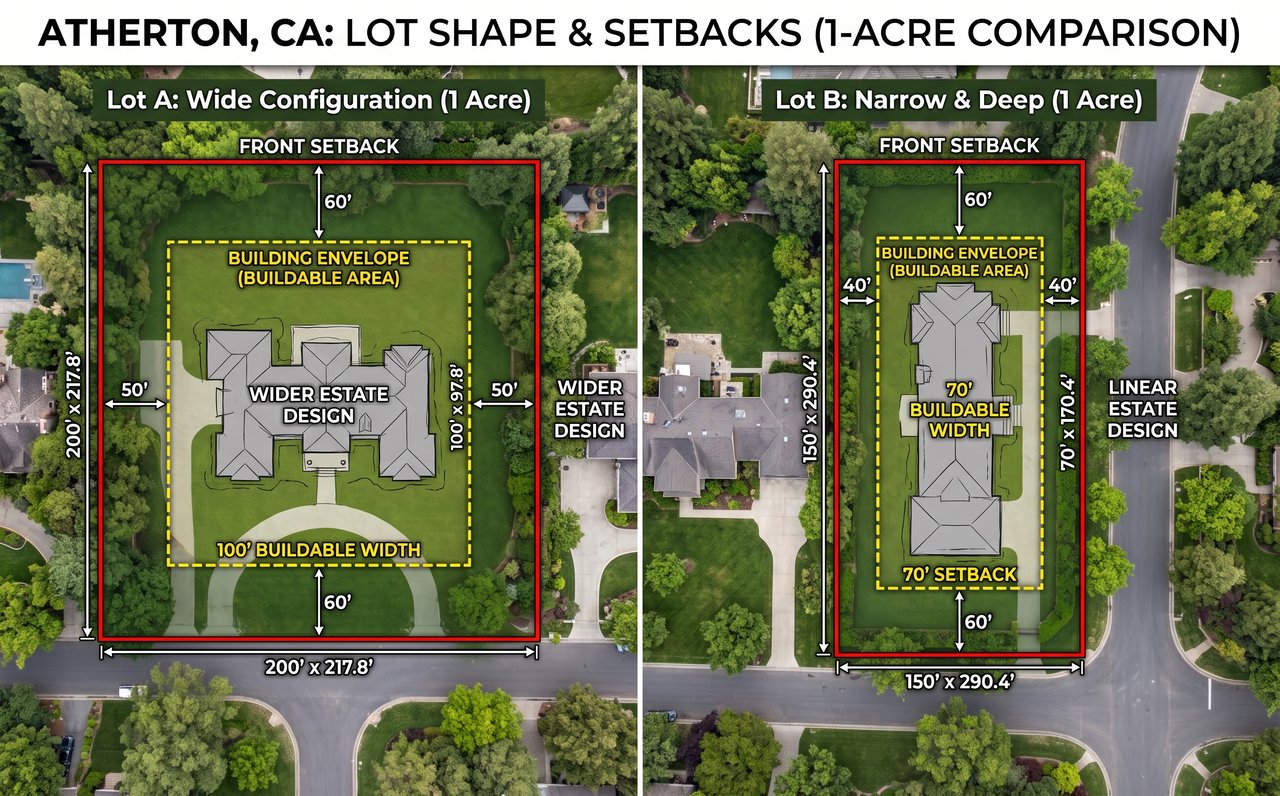
Zoning regulations, setbacks, height limits, lot coverage, easements, and other applicable restrictions may affect what can be built.
A property's advertised lot size does not necessarily represent its usable or buildable area.
4. Financing and Competitive Offers
Homes in desirable neighborhoods near Stanford can attract considerable buyer interest.
Obtaining appropriate financing preapproval, reviewing comparable sales, understanding the property's condition, and preparing a carefully structured offer can strengthen a buyer's position.
However, buyers should balance competitiveness with appropriate due diligence and financial discipline.
5. Long-Term Resale Considerations
Buyers should consider future resale flexibility, property condition, neighborhood characteristics, and potential changes in their housing needs.
For Stanford leasehold properties, contractual resale restrictions and eligibility requirements deserve particular attention because they may limit the future buyer pool.
Step-by-Step Guide to Buying a House Near Stanford University
- Define your housing goals. Determine whether campus proximity, walkability, lot size, architectural style, or other considerations are most important.
- Confirm your purchasing eligibility. If considering Stanford university housing, contact Faculty Staff Housing to determine which programs and leasehold properties may be available to you.
- Establish your budget. Review financing options, cash requirements, property taxes, insurance, and other ownership expenses.
- Select target neighborhoods. Compare College Terrace, Professorville, Crescent Park, University South, Old Palo Alto, and suitable Menlo Park neighborhoods.
- Review available properties and comparable sales. Assess asking prices against recently completed transactions involving similar homes.
- Conduct appropriate due diligence. Review property inspections, disclosures, title matters, easements, permits, and applicable lease documents.
- Prepare and negotiate an offer. Consider price, contingencies, financing, possession, and other contractual terms.
- Complete the transaction. Coordinate financing, escrow, title, inspections, and closing requirements.
For campus leasehold purchases, Stanford's specific purchasing procedures and contract requirements must also be followed.
Frequently Asked Questions About Buying a House Near Stanford University
Can anyone buy a house on Stanford University's campus?
No. Stanford's residential ground lease programs generally restrict campus home purchases to eligible university-affiliated buyers. Eligibility depends on the particular housing program and employment classification.
What is the closest Palo Alto neighborhood to Stanford University?
College Terrace is one of the closest residential neighborhoods to Stanford's main campus. Other nearby areas include parts of Professorville and University South, depending on the specific campus destination.
Can I buy a home near Stanford without working for the university?
Yes. Privately owned homes in Palo Alto, Menlo Park, and other surrounding communities are available to qualified buyers regardless of Stanford employment or affiliation.
Does Stanford University provide homebuying assistance?
Yes. Stanford offers housing assistance and financing programs for eligible faculty and certain other qualifying employees. Program requirements and benefits vary.
Can I use a real estate agent to purchase Stanford faculty housing?
Yes. Stanford permits eligible buyers to use independent real estate agents for campus housing transactions. However, university-specific contracts, procedures, and compensation arrangements may apply.
Is buying a house near Stanford a good investment?
Stanford's location, surrounding employment opportunities, and established residential neighborhoods contribute to long-term housing demand. However, no property is guaranteed to appreciate, and buyers should evaluate acquisition costs, market conditions, property characteristics, and future ownership obligations.
Final Thoughts: Finding the Right Home Near Stanford University
Buying a house near Stanford University offers access to an exceptional combination of academic institutions, Silicon Valley employment opportunities, established neighborhoods, and Peninsula amenities.
Whether you are a Stanford faculty member exploring university housing, a technology professional considering Palo Alto, or a family seeking a residence near campus, understanding the differences between available properties is essential.
For many buyers, the most important decision is choosing between Stanford's specialized leasehold housing arrangements and conventional privately owned properties in surrounding communities.
Careful planning, neighborhood research, and property-specific due diligence can help buyers make informed decisions.
Work With Milad Real Estate
At Milad Real Estate, we assist homebuyers and sellers throughout Palo Alto, Menlo Park, Stanford, and the surrounding San Francisco Peninsula.
Founded by Aria Vatankhah, a California real estate broker and attorney, Milad Real Estate combines real estate brokerage experience with legal knowledge to assist clients with property transactions, negotiations, and the evaluation of real estate opportunities.
Whether you are searching for a residence near Stanford University, considering a luxury home in Palo Alto, or evaluating a property with renovation or development potential, we welcome the opportunity to discuss your goals.
Explore nearby communities:
Contact Milad Real Estate
Aria Vatankhah | Real Estate Broker & Attorney
Phone: (650) 799-8168
Email: [email protected]
Sources and Additional Information: Stanford Faculty Staff Housing, Stanford Ground Lease Program, Stanford Homebuyer Programs, and Stanford Local Communities Guide.
Disclaimer: This article is provided for general informational purposes. Stanford housing eligibility, ground lease provisions, financing programs, local regulations, and real estate conditions are subject to change. Buyers should independently verify all applicable requirements before entering into a transaction.