Spring has traditionally been one of the most active seasons for residential real estate. More homeowners prepare to list their properties, buyers begin searching for new homes, and competition can increase for desirable properties.
As spring 2027 approaches, prospective homebuyers in Silicon Valley face a housing market that differs considerably from the conditions experienced during 2021 and 2022.
Mortgage rates remain substantially higher than their pandemic-era lows, housing affordability continues to be a challenge, and the availability of homes varies significantly between communities.
For buyers considering Menlo Park homes for sale, Palo Alto real estate, or properties in Atherton and Los Altos, preparation can make a substantial difference.
The key to buying successfully in spring 2027 is not simply acting quickly. It is understanding the market, preparing your financing, and recognizing the right opportunity when it becomes available.
What Should Homebuyers Expect in Spring 2027?
Three factors are likely to influence the spring 2027 housing market: mortgage rates, available housing inventory, and buyer demand.
According to the California Association of REALTORS® (C.A.R.), statewide existing single-family home sales are forecast to increase by approximately 3.7% in 2027, while the statewide median home price is projected to rise by approximately 1.4%.
C.A.R. also anticipates some improvement in housing inventory, although the organization expects the overall supply of available homes to remain constrained.
These projections suggest a potentially more active California housing market in 2027, but statewide forecasts should not be treated as predictions for individual Silicon Valley neighborhoods.
Communities such as Atherton, Palo Alto, Menlo Park, and Los Altos have distinct housing markets influenced by local inventory, property values, technology-sector employment, and the characteristics of individual homes.
1. Mortgage Rates Will Continue to Influence Purchasing Power
Mortgage rates are among the most important factors affecting the cost of buying a home.
According to Freddie Mac, the national average interest rate for a 30-year fixed-rate mortgage was 7.24% as of October 29, 2026.
Although mortgage rates fluctuate, they remain significantly higher than the approximately 3% rates available during 2021.
For buyers financing a property, these differences can have a substantial effect on monthly payments and total borrowing costs.
How Much Can Mortgage Rates Affect Your Monthly Payment?
Consider a buyer purchasing a $2 million property with a 20% down payment.
The resulting mortgage would be $1.6 million.
Mortgage Rate | Approximate Monthly Principal and Interest |
|---|---|
7.25% | $10,915 |
6.25% | $9,852 |
5.25% | $8,835 |
These estimates assume a 30-year fixed-rate mortgage and exclude property taxes, homeowners insurance, maintenance, and other expenses.
A one-percentage-point difference in the mortgage rate can change the monthly payment by more than $1,000 in this example.
However, buyers should not assume that waiting for lower mortgage rates will automatically result in a less expensive purchase.
If borrowing costs decline, additional purchasers may enter the market, potentially increasing competition and influencing prices.
Buyers should evaluate whether they can comfortably afford the property under current financing terms rather than depend on a future opportunity to refinance.
2. Will More Homes Be Available in Spring 2027?
Housing inventory is the second major factor buyers should monitor.
Historically, more homeowners list their properties during spring than during the winter months.
Longer daylight hours, favorable weather, and the timing of household moves can contribute to increased listing activity.
However, additional inventory does not necessarily mean that home prices will decline.
More available properties may give buyers additional choices, but spring can also bring greater competition from other purchasers.
According to the National Association of REALTORS®, the United States had approximately 1.6 million existing homes available for sale at the end of September 2026, representing about 4.8 months of housing supply.
This represents a different national market from the extremely limited inventory experienced during 2021 and early 2022.
Nevertheless, national statistics do not necessarily reflect the supply of homes in expensive Silicon Valley neighborhoods.
In established communities such as Palo Alto and Los Altos, desirable single-family homes may still receive substantial buyer interest even when broader national housing conditions become more balanced.
3. Why Silicon Valley Housing Markets Are Different
Silicon Valley's residential real estate market is influenced by several characteristics that distinguish it from many other parts of California.
The region includes major technology companies, research institutions, venture capital firms, and Stanford University.
These employers contribute to the region's concentration of professionals, entrepreneurs, and financially qualified homebuyers.
At the same time, many established neighborhoods have limited opportunities for large-scale new single-family residential development.
Consequently, housing supply can remain relatively constrained even when mortgage rates rise or overall economic conditions become less favorable.
However, Silicon Valley is not a single uniform housing market.
A newly constructed luxury estate in Atherton may attract a different buyer group than a condominium in Palo Alto or an older single-family home in Menlo Park.
Understanding the specific market for the property you intend to purchase is essential.
4. Get Mortgage Preapproval Before Beginning Your Home Search
One of the most important steps buyers can take before the spring selling season is obtaining mortgage preapproval.
Preapproval helps establish the approximate loan amount for which a borrower may qualify, subject to underwriting and other conditions.
It also helps buyers understand the monthly payments associated with different purchase prices.
Before applying, buyers should review their:
- Credit history and credit scores.
- Employment and income documentation.
- Existing monthly debt obligations.
- Available funds for a down payment.
- Estimated closing costs.
- Cash reserves after purchasing.
Buyers should also compare mortgage quotes from more than one lender.
The interest rate is important, but loan origination fees, points, annual percentage rate, and other financing costs can materially affect the overall expense of borrowing.
For luxury properties in Silicon Valley, buyers may need to evaluate jumbo mortgage programs with underwriting and reserve requirements that differ from conventional conforming loans.
5. Establish a Realistic Homebuying Budget
The maximum mortgage amount a lender is willing to approve is not necessarily the amount a buyer should borrow.
Homeownership involves expenses beyond the monthly principal and interest payment.
These may include:
- Property taxes.
- Homeowners insurance.
- Maintenance and repairs.
- Utilities.
- HOA fees, when applicable.
- Future renovations or improvements.
In California, buyers should also account for the reassessment of property taxes following a change in ownership, subject to applicable exclusions.
The seller's current property tax bill may be substantially lower than what the new owner will pay.
Buyers should calculate the total expected ownership costs before deciding on a purchase price.
6. Understand the Differences Between Silicon Valley Neighborhoods
Spring homebuyers should research neighborhoods before scheduling property showings.
Each Silicon Valley community offers different housing options, lot characteristics, and price ranges.
Menlo Park
Menlo Park offers established residential neighborhoods, access to major employment centers, and a range of housing options.
Neighborhoods such as Central Menlo, Allied Arts, Sharon Heights, and the Willows differ in architectural character, lot sizes, location, and property values.
Buyers should compare individual neighborhoods carefully rather than assume that properties throughout the city are directly comparable.
Explore Menlo Park homes for sale.
Palo Alto
Palo Alto attracts buyers seeking proximity to Stanford University, major Silicon Valley employers, shopping, and established neighborhoods.
Housing options range from condominiums and townhomes to older single-family residences and newly constructed luxury homes.
Explore Palo Alto homes for sale.
Atherton
Atherton is known for large residential parcels, privacy, mature landscaping, and luxury estates.
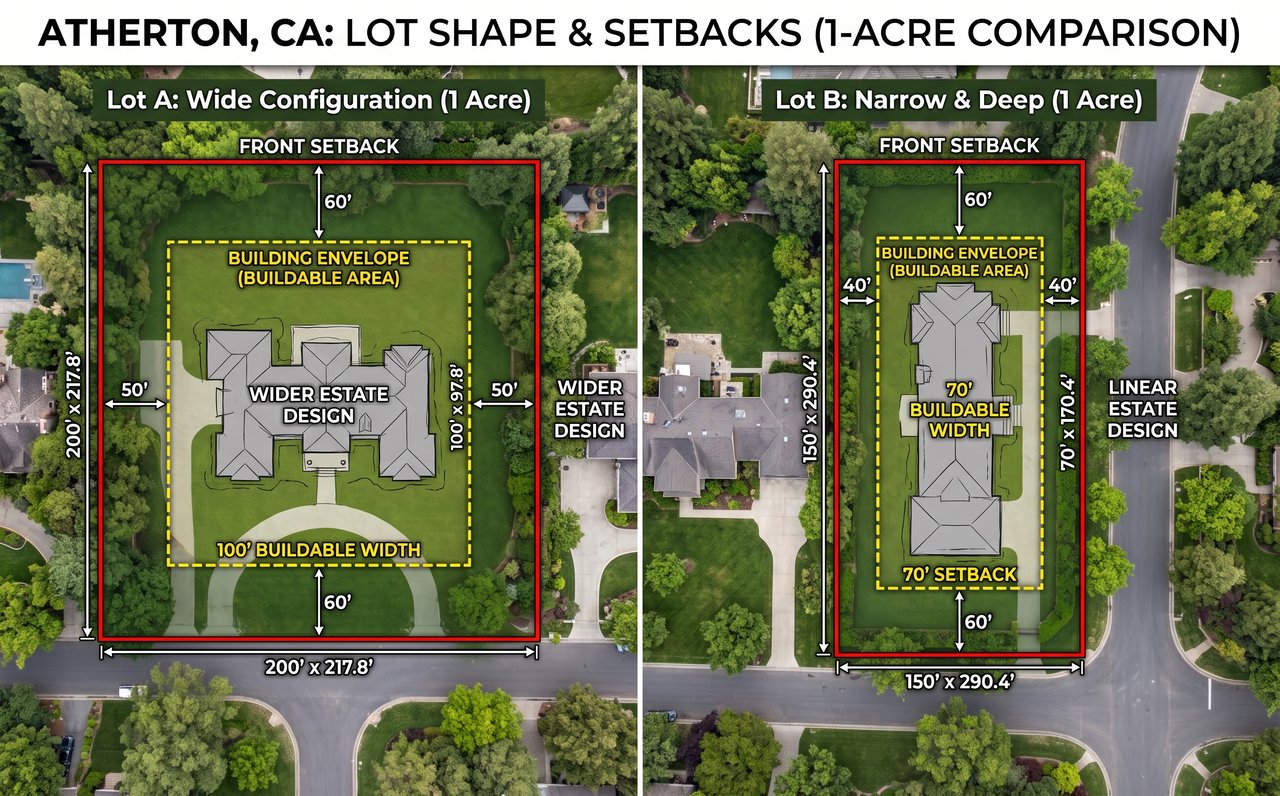
For buyers in this market, land value, architectural quality, lot configuration, and redevelopment potential can be particularly important.
Los Altos
Los Altos offers tree-lined residential neighborhoods, a pedestrian-friendly downtown, and convenient access to major technology employment centers.
Properties vary considerably in age, lot size, architectural style, and potential for renovation or redevelopment.
Explore Los Altos homes for sale.
7. Be Prepared to Act Quickly Without Making a Rushed Decision
In a competitive spring market, desirable properties may attract attention shortly after being listed.
Buyers who have already established their financing, researched neighborhoods, and reviewed comparable sales are generally better positioned to evaluate new listings efficiently.
However, being prepared does not mean making an offer without appropriate due diligence.
Before submitting an offer, buyers should evaluate:
- Recent comparable sales.
- Property condition and inspection reports.
- Seller disclosures.
- Permit records for significant improvements.
- Property boundaries and recorded easements.
- Potential repair and maintenance expenses.
- Financing, appraisal, and investigation contingencies.
In Silicon Valley, an older home may have substantial land value, but future redevelopment opportunities can be affected by setbacks, protected trees, easements, or other restrictions.
Understanding these issues before making an offer can help buyers avoid unexpected expenses after purchasing.
8. Understand California's Buyer Representation Requirements
California's rules governing buyer representation changed beginning in 2025.
Under Assembly Bill 2992, buyers represented by a real estate broker generally must enter into a written buyer-broker representation agreement as soon as practicable, but no later than execution of an offer to purchase.
Applicable regulations and multiple listing service rules can require the agreement to be completed before property showings.
The agreement addresses matters including the services provided, compensation, when compensation is due, and the agreement's duration.
Broker compensation is negotiable and is not established by law.
Buyers should understand these terms before entering into a representation agreement.
Additional information is available from the California Department of Real Estate.
9. Should You Wait Until Spring 2027 to Buy?
Not necessarily.
Although spring traditionally brings more listings, buyers who are financially prepared may find suitable opportunities during the preceding winter months.
Winter may offer less competition for certain properties, particularly homes that have remained on the market for an extended period.
On the other hand, waiting until spring may provide a greater selection of available homes.
The appropriate decision depends on the buyer's financial readiness, the quality of available properties, and long-term ownership plans.
Buyers should avoid assuming that spring will automatically bring lower prices or better mortgage rates.
There is no guarantee that delaying a purchase will result in more favorable financial terms.
10. How to Prepare for the Spring 2027 Buying Season
Buyers planning to purchase a home in spring 2027 can improve their readiness by completing several important steps in advance.
- Determine your purchasing budget: Establish a comfortable monthly housing payment and available down payment.
- Obtain mortgage preapproval: Understand your borrowing options before making an offer.
- Research neighborhoods: Compare locations, property types, and housing costs.
- Review recent sales: Understand the market value of properties that meet your criteria.
- Clarify your priorities: Distinguish essential property features from preferences.
- Understand buyer representation: Review your agent's services, compensation, and contractual obligations.
- Prepare for due diligence: Understand disclosures, inspections, title issues, and contingencies.
- Monitor new listings: Evaluate suitable properties as they become available.
Preparation can help buyers make informed decisions while remaining competitive when the right property appears.
Frequently Asked Questions About Buying a Home in Spring 2027
Will more homes be available for sale in spring 2027?
Spring traditionally brings increased listing activity. The California Association of REALTORS® also forecasts some improvement in housing inventory during 2027, although the actual number of available homes will vary by community and property type.
Will mortgage rates decline in 2027?
Mortgage rates are difficult to predict. Buyers should monitor current lender quotes and evaluate whether a purchase is affordable under available financing terms rather than depend on future rate reductions.
Will Silicon Valley home prices fall in spring 2027?
There is no reliable way to predict short-term price changes across all Silicon Valley communities. Property values depend on inventory, buyer demand, economic conditions, and individual property characteristics.
Is spring the best time to buy a home?
Spring often provides more housing choices but can also bring greater competition. Buyers may find attractive opportunities throughout the year depending on available listings and their financial circumstances.
How can buyers compete without overpaying?
Buyers should obtain preapproval, review comparable sales, understand the property's condition, and establish a maximum acceptable purchase price before submitting an offer.
Should buyers waive inspections to make a stronger offer?
Waiving investigation protections can expose buyers to substantial financial risks. Buyers should understand the consequences and evaluate available disclosures and property reports before considering any changes to contractual contingencies.
Final Thoughts: Preparation Matters More Than Predicting the Market
Spring 2027 may bring additional housing opportunities as more homeowners list their properties and market activity increases.
However, mortgage rates, housing inventory, and buyer competition will continue to influence purchasing decisions.
In Silicon Valley, the most desirable properties can remain competitive even when national or statewide housing conditions become more balanced.
For buyers, the most effective strategy is to prepare financially, research individual neighborhoods, understand property values, and act when an appropriate opportunity becomes available.
Buying a home successfully is not about making the fastest offer. It is about making a well-informed offer on the right property at a price you can comfortably afford.
Find Your Silicon Valley Home With Milad Real Estate
At Milad Real Estate, we help buyers and sellers navigate residential real estate transactions throughout Menlo Park, Palo Alto, Atherton, Los Altos, Woodside, Portola Valley, and surrounding Silicon Valley communities.
As both a real estate broker and attorney, Aria Vatankhah brings experience in property transactions, contractual matters, real estate development, and land-use considerations.
Whether you are buying your first home, moving to a larger residence, or evaluating a luxury property, Milad Real Estate can help you understand local market conditions and assess available opportunities.
Explore Silicon Valley homes for sale or contact Milad Real Estate to discuss your homebuying goals.
Aria Vatankhah
Founder, Milad Real Estate
Real Estate Broker | Attorney at Law
Phone: 650-799-8168
Email: [email protected]
Sources:Freddie Mac — Primary Mortgage Market Survey; National Association of REALTORS® — Existing Home Sales; California Association of REALTORS® — 2027 Housing Market Forecast; California Department of Real Estate — Buyer Representation.
Updated November 2026 for the spring 2027 homebuying season. Market forecasts are estimates rather than guarantees. Mortgage rates, prices, and inventory can change. This article provides general real estate information and does not constitute individualized legal, lending, tax, or financial advice.