Menlo Park Housing and Development Guide | Updated November 2026
Housing development has become one of the most important planning issues facing Menlo Park, California. With its location in Silicon Valley, established residential neighborhoods, major employment centers, and limited availability of undeveloped land, the city must balance new housing opportunities with infrastructure, neighborhood character, and community needs.
In 2022, Menlo Park attracted attention when its City Council voted to disband the Community Engagement and Outreach Committee (CEOC), which had been involved in the preparation of the city's Housing Element.
At the time, concerns about public participation and the committee's role raised questions about how the city would incorporate community feedback into its housing plans.
Since then, the planning process has moved forward substantially.
Menlo Park adopted its 2023–2031 Housing Element, received certification from the California Department of Housing and Community Development (HCD) in March 2024, and implemented significant zoning changes intended to accommodate additional residential development.
For residents, homeowners, buyers, and real estate investors, the important question today is how Menlo Park's adopted housing policies affect future development, neighborhood planning, and individual properties.
This article explains the city's Housing Element, the role of public engagement, and what property owners should consider as Menlo Park implements its housing policies through 2031.
What Is the Menlo Park Housing Element?
Every California city and county is required to adopt a Housing Element as part of its General Plan.
The Housing Element establishes policies, programs, and land-use strategies intended to accommodate housing needs across different income categories.
It is updated periodically under California housing law and reviewed by the California Department of Housing and Community Development.
Menlo Park's current Housing Element covers the 2023–2031 planning period.
The plan addresses subjects including:
- Housing development opportunities
- Land-use and zoning regulations
- Affordable housing needs
- Housing opportunities for different household income levels
- Fair housing objectives
- Constraints affecting residential construction
- Implementation and monitoring programs
The Housing Element is not itself a building permit or authorization for construction on every property identified in the plan.
Individual development projects remain subject to applicable zoning, permitting, building, environmental, and other legal requirements.
How Many New Homes Is Menlo Park Planning For?
Under the 2023–2031 Regional Housing Needs Allocation (RHNA), Menlo Park must demonstrate adequate planning capacity for 2,946 additional housing units across several income categories.
Income Category | Housing Allocation |
|---|---|
Very low income | 740 units |
Low income | 426 units |
Moderate income | 496 units |
Above moderate income | 1,284 units |
Total | 2,946 units |
These figures represent the city's regional housing planning allocation, not completed construction or an inventory of approved projects.
Planning for additional residential capacity involves identifying suitable sites and adopting policies that can accommodate housing development.
Actual construction depends on landowner decisions, financing, developer interest, permitting, and other considerations.
For current official information, visit the City of Menlo Park Housing Element website.
Why Was Menlo Park's Community Engagement and Outreach Committee Disbanded?
During preparation of the Housing Element update, Menlo Park established a Community Engagement and Outreach Committee, commonly called CEOC.
The committee was intended to assist with public involvement and outreach concerning the city's housing planning process.
However, disagreements developed over the committee's structure, responsibilities, and effectiveness.
On March 1, 2022, Menlo Park's City Council adopted a resolution disbanding the committee.
The city had also considered the use of community-based organizations to supplement public engagement activities.
Those events reflected concerns about how to involve residents and community organizations in an important planning process.
However, the dissolution of CEOC should be understood as a historical event rather than evidence that the current Housing Element remains unfinished.
Menlo Park subsequently adopted its Housing Element and obtained state certification.
When Was Menlo Park's Housing Element Approved?
Menlo Park's current Housing Element developed through a multiyear planning and review process.
January 2023: Initial Adoption
On January 31, 2023, the City Council adopted the 2023–2031 Housing Element.
The plan was then subject to further review and revisions intended to address state housing requirements.
December 2023: State Compliance Review
On December 20, 2023, California HCD informed the city that the revised Housing Element was in substantial compliance with state housing law.
January 2024: Additional Amendments
On January 23, 2024, the City Council adopted amendments to the Housing Element.
March 2024: State Certification
On March 20, 2024, HCD certified Menlo Park's 2023–2031 Housing Element.
The city announced the certification on March 21, 2024.
Certification confirmed HCD's determination that the adopted Housing Element substantially complied with applicable state Housing Element law at that time.
It did not mean every planned housing project had been approved or completed.
The city remains responsible for implementing and monitoring its housing programs.
What Zoning Changes Did Menlo Park Adopt?
As part of implementing its Housing Element, Menlo Park adopted several land-use and zoning amendments in November and December 2023.
These changes were intended to create additional residential development opportunities and accommodate different housing types and income levels.
According to the city, the amendments included measures intended to:
- Increase allowable residential densities in certain areas
- Create opportunities for residential and mixed-use development
- Allow housing opportunities on some previously nonresidential sites
- Support housing development at different affordability levels
- Encourage residential activity in appropriate commercial and mixed-use areas
- Implement programs identified in the Housing Element
However, the effect of these amendments varies by property location and zoning designation.
Homeowners should not assume that every residential parcel was rezoned or that every property qualifies for higher-density development.
Before evaluating a proposed project, property owners should review the applicable zoning map, development standards, and site-specific constraints.
How Could Housing Development Affect Menlo Park Neighborhoods?
The impact of Menlo Park's housing policies may differ across its neighborhoods and commercial corridors.
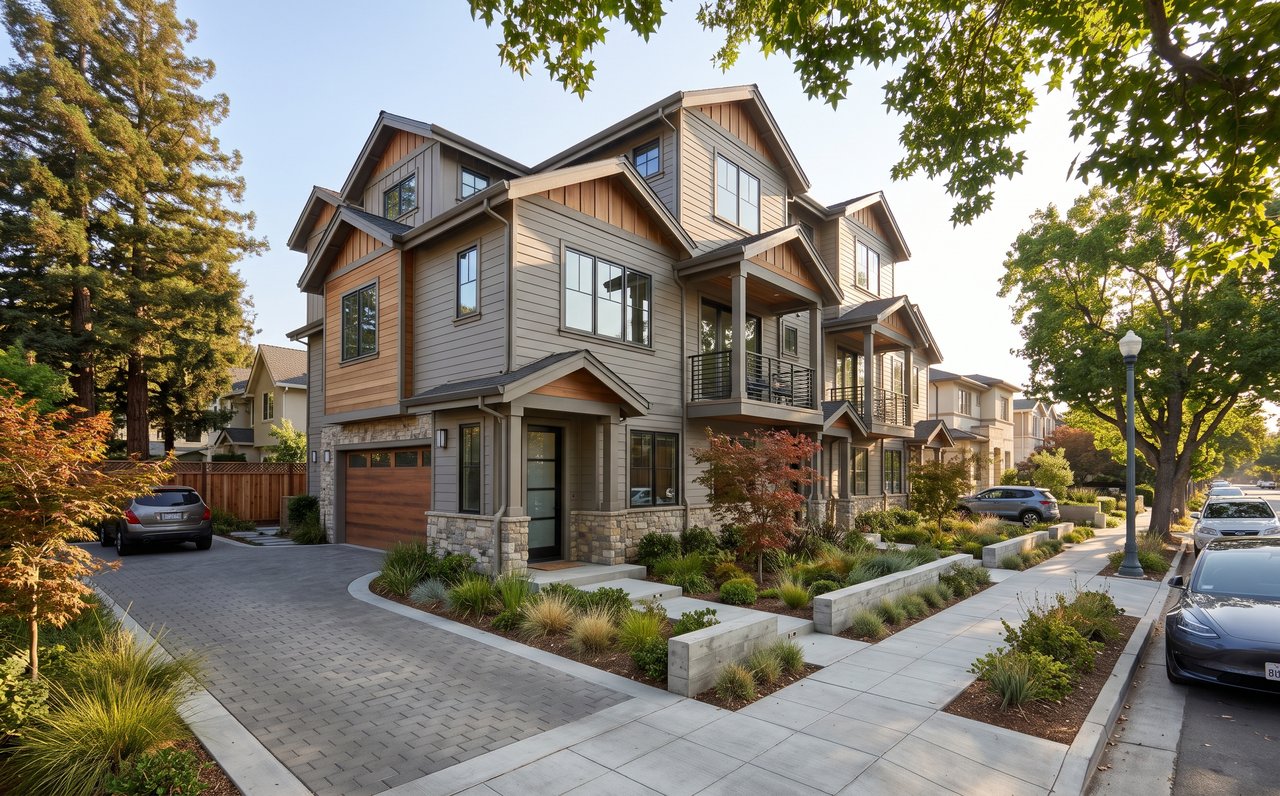
In locations where higher-density or mixed-use housing is permitted, new residential projects may introduce additional housing opportunities and changes in the surrounding built environment.
Such projects may raise questions concerning:
- Building height and design
- Traffic and transportation
- Parking and access
- Public utilities and infrastructure
- Local services and amenities
- Affordable housing
- Environmental conditions
- Compatibility with surrounding development
The Housing Element provides a policy and planning framework, but the specific effects of an individual project depend on its location and design.
For real estate buyers and sellers, it is important to distinguish adopted land-use policies from proposals that have not yet received necessary approvals.
What Does the Housing Element Mean for Menlo Park Homeowners?
Homeowners may want to understand whether adopted housing policies affect their property or nearby land.
For example, new zoning standards or state housing legislation may influence the kinds of residential improvements that can be considered on eligible properties.
However, the feasibility of additional development depends on more than a property's location.
Relevant considerations may include:
- Current zoning designation
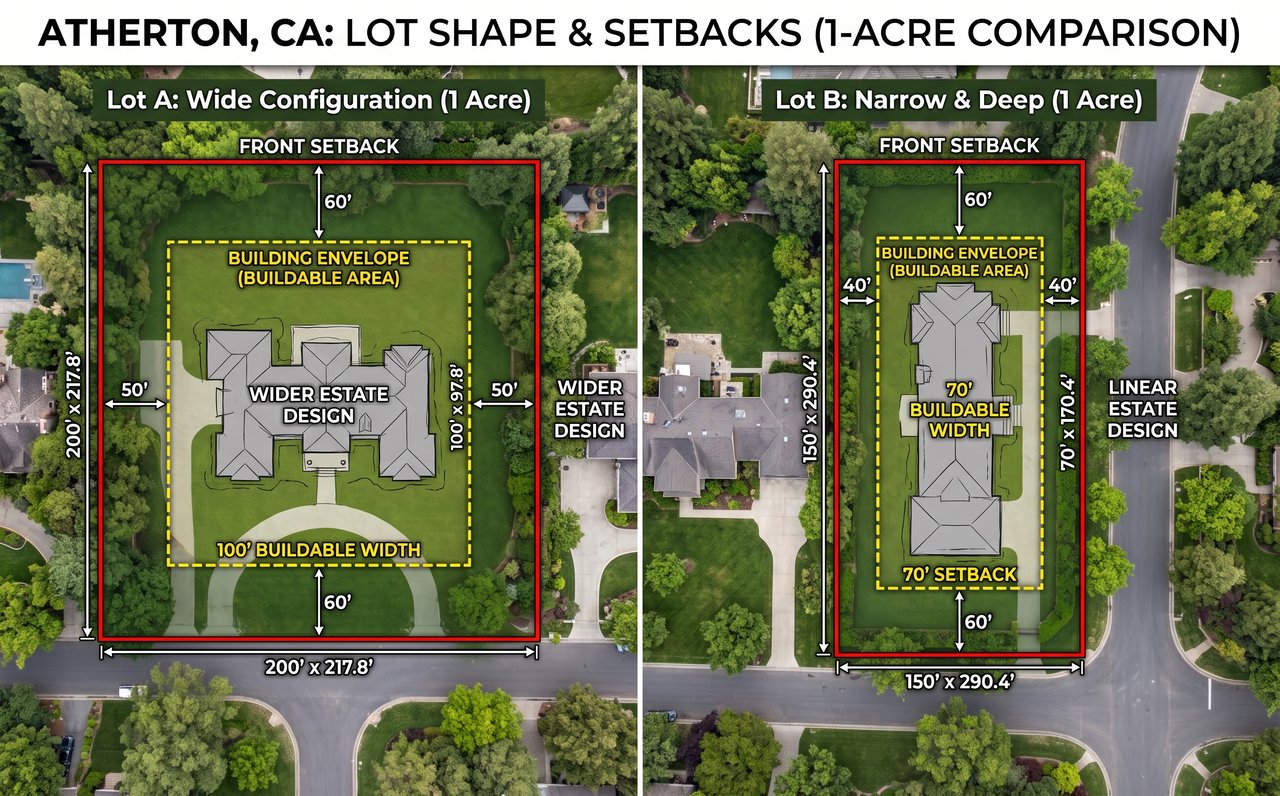
- Lot dimensions and configuration
- Building setbacks and height limitations
- Existing structures and permit history
- Easements and utility infrastructure
- Protected trees
- Drainage and site conditions
- Applicable state housing laws
Homeowners considering remodeling, accessory dwelling units, property subdivision, or other construction should review the requirements applicable to their particular parcel.
A citywide housing policy does not automatically establish an individual property's development rights.
How Do California Housing Laws Interact With Menlo Park Zoning?
In addition to local Housing Element policies, state legislation affects certain residential development opportunities throughout California.
Examples include laws addressing accessory dwelling units and qualifying residential lot splits.
California Senate Bill 9 established a framework for certain two-unit residential projects and urban lot splits on eligible parcels.
Subsequent legislation, including SB 450, amended aspects of the SB 9 approval process.
Separately, California ADU laws establish rights and approval procedures for qualifying accessory dwelling units.
These state laws may limit the ability of local governments to impose certain restrictions on eligible projects.
However, qualification depends on statutory requirements, parcel characteristics, and other applicable standards.
It is important to analyze the particular project rather than assume that state housing legislation overrides every local development regulation.
How Does Menlo Park's Housing Element Address Environmental Justice?
Menlo Park's Housing Element update was part of a broader planning effort that included an Environmental Justice Element and an update to the city's Safety Element.
On September 24, 2024, the City Council adopted the Environmental Justice Element and updated Safety Element.
The Environmental Justice Element addresses considerations related to environmental conditions, community participation, and equitable access to resources and opportunities.
Housing and environmental planning can overlap in areas involving transportation, neighborhood conditions, public infrastructure, and access to community services.
These policies reflect the city's broader planning responsibilities beyond determining the number of new housing units that may be accommodated.
How Can Residents Participate in Menlo Park Housing Decisions?
Although CEOC was dissolved in 2022, residents continue to have opportunities to participate in city housing policy discussions.
Menlo Park maintains a Housing Commission that advises the City Council on housing-related matters.
The commission's responsibilities include reviewing housing supply and affordability issues, housing policies, the Below Market Rate housing program, and Housing Element matters.
Residents can also follow housing-related agenda items considered by the Planning Commission and City Council.
1. Follow Housing Commission Meetings
The Housing Commission generally meets on the first Wednesday of each month, although meeting dates and formats may change.
Its agendas, minutes, and available recordings are published by the city.
Visit the Menlo Park Housing Commission website for current information.
2. Review City Council and Planning Commission Agendas
Housing and development policies may be considered through public hearings, planning applications, and other agenda items.
Residents can review upcoming meetings, staff reports, and supporting materials through the city's agenda system.
See Menlo Park Agendas and Minutes.
3. Review the Housing Element and Annual Progress Reports
The city publishes its adopted Housing Element and Annual Progress Reports documenting housing-related activities.
These reports can provide a useful basis for understanding the status of housing programs and comparing planning objectives with reported activities.
Visit the Housing Element Annual Progress Reports page.
4. Submit Comments on Relevant Projects and Policies
Residents may be able to provide public comments during designated meeting periods and through other procedures established for specific planning matters.
Participation methods and deadlines depend on the meeting or project.
Anyone interested in a particular proposal should review its official notice and current city instructions.
Does More Housing Automatically Mean Lower Menlo Park Home Prices?
Not necessarily.
Increasing housing supply may improve the availability of housing options over time, but the effects on market prices depend on many factors.
These include the type of homes constructed, their locations, construction costs, the pace of development, financing conditions, and buyer or renter demand.
For example, additional apartments may help expand rental options without directly increasing the number of detached single-family houses available for purchase.
Likewise, new multifamily housing does not automatically create comparable alternatives to a luxury residence in Central Menlo.
Housing supply should therefore be evaluated by housing type and geographic area rather than treating all newly planned units as interchangeable.
What Should Menlo Park Buyers and Sellers Watch Through 2031?
For property buyers, housing policy changes may be relevant when evaluating the future surroundings of a particular home or the potential use of land.
For sellers, nearby development and zoning changes may influence how prospective purchasers assess a property.
Important topics to monitor include:
- Changes to zoning and development standards
- Residential and mixed-use project proposals
- Approved and completed housing developments
- Infrastructure and transportation improvements
- State housing legislation
- Housing Element implementation reports
- Property-specific development opportunities and constraints
However, neither a housing plan nor a development proposal guarantees a particular change in surrounding property values.
Market value depends on the characteristics of the individual property and prevailing market conditions.
Frequently Asked Questions About Menlo Park's Housing Element
What is Menlo Park's current Housing Element?
Menlo Park's current Housing Element covers the 2023–2031 planning period. It establishes the city's housing policies and programs and identifies how Menlo Park plans to accommodate its regional housing needs allocation.
How many additional homes must Menlo Park plan for?
Menlo Park's 2023–2031 Regional Housing Needs Allocation is 2,946 units across four income categories. This is a planning target and should not be confused with the number of homes already completed.
Has California approved Menlo Park's Housing Element?
Yes. California HCD certified Menlo Park's 2023–2031 Housing Element on March 20, 2024.
What happened to the Community Engagement and Outreach Committee?
Menlo Park City Council voted to disband the Housing Element Community Engagement and Outreach Committee on March 1, 2022. Housing planning and public participation continued through other city processes.
Can Menlo Park residents still participate in housing policy decisions?
Yes. Residents can review and participate in applicable Housing Commission, Planning Commission, and City Council proceedings. Meeting schedules and participation requirements are published through the city's official website.
Does the Housing Element allow every homeowner to build additional units?
No. Development eligibility depends on the property's zoning, site conditions, applicable state laws, and other regulatory requirements. Each proposed project requires property-specific review.
Will Menlo Park's housing policies affect property values?
Housing and zoning policies may influence development opportunities and neighborhood conditions. However, changes in individual property values cannot be determined from the Housing Element alone.
Final Thoughts: Menlo Park's Housing Plans Are Moving From Policy to Implementation
The dissolution of Menlo Park's Community Engagement and Outreach Committee was an important event in the city's earlier housing planning process.
However, that historical dispute no longer describes the current status of the city's Housing Element.
Menlo Park has since adopted its 2023–2031 Housing Element, received state certification, enacted implementing zoning amendments, and continued housing policy oversight through its commissions, City Council, and annual reporting process.
For residents, property owners, and prospective buyers, the most useful approach is to follow the city's current housing programs and understand how applicable policies affect individual properties.
Menlo Park's housing future will be shaped not only by the number of homes planned, but also by where development occurs, how projects are implemented, and how residents participate in the process.
Work With Milad Real Estate
At Milad Real Estate, we assist buyers and sellers throughout Menlo Park, Atherton, Palo Alto, Redwood City, Woodside, Los Altos, and surrounding San Francisco Peninsula communities.
Founded by Aria Vatankhah, a California real estate broker and attorney, Milad Real Estate combines local brokerage experience with legal knowledge to assist clients in evaluating property characteristics, real estate transactions, and development-related considerations.
Whether you are considering purchasing a Menlo Park property, evaluating potential improvements, or preparing to sell a residence, we welcome the opportunity to discuss your real estate objectives.
Explore nearby communities:
- Menlo Park Real Estate
- Atherton Luxury Real Estate
- Palo Alto Real Estate
- Redwood City Real Estate
- Woodside Real Estate
Contact Aria Vatankhah
Real Estate Broker & Attorney | Milad Real Estate
Phone: (650) 799-8168
Email: [email protected]
Official Sources: City of Menlo Park – 2023–2031 Housing Element; City of Menlo Park – State Housing Element Certification, March 2024; Menlo Park Housing Commission; Housing Element Annual Progress Reports; City Meeting Agendas and Minutes.
Disclaimer: This article is intended for general informational purposes and does not constitute a legal opinion, zoning determination, development approval, property valuation, or guarantee of future market conditions. Housing policies, development regulations, and project statuses may change. Readers should verify current requirements with the City of Menlo Park and appropriate professionals before relying on a particular development proposal.