Palo Alto Real Estate & Property Development | Updated November 2026
Accessory dwelling units (ADUs) have become an important part of California's housing landscape. In communities such as Palo Alto, where housing costs are high and developable land is limited, ADUs can provide additional residential space without requiring the creation of an entirely new subdivision.
For Palo Alto homeowners, an ADU may provide independent living accommodations for family members, additional rental housing, or flexibility as household needs change.
However, determining what can actually be built requires understanding both California state law and the City of Palo Alto's local regulations.
Over the past several years, California's Department of Housing and Community Development (HCD) has reviewed Palo Alto's ADU ordinances and identified provisions that did not comply with state housing law. The city subsequently amended its regulations, while additional statewide legislative changes became effective in 2026.
For homeowners and prospective buyers, the central question is no longer simply whether Palo Alto was required to revise its rules. It is what the applicable ADU regulations permit today and how those rules affect a particular property.
This guide examines Palo Alto's ADU regulations for 2026–2027, including unit sizes, setbacks, height limits, parking requirements, permitting, and important considerations for real estate buyers and sellers.
What Is an Accessory Dwelling Unit?
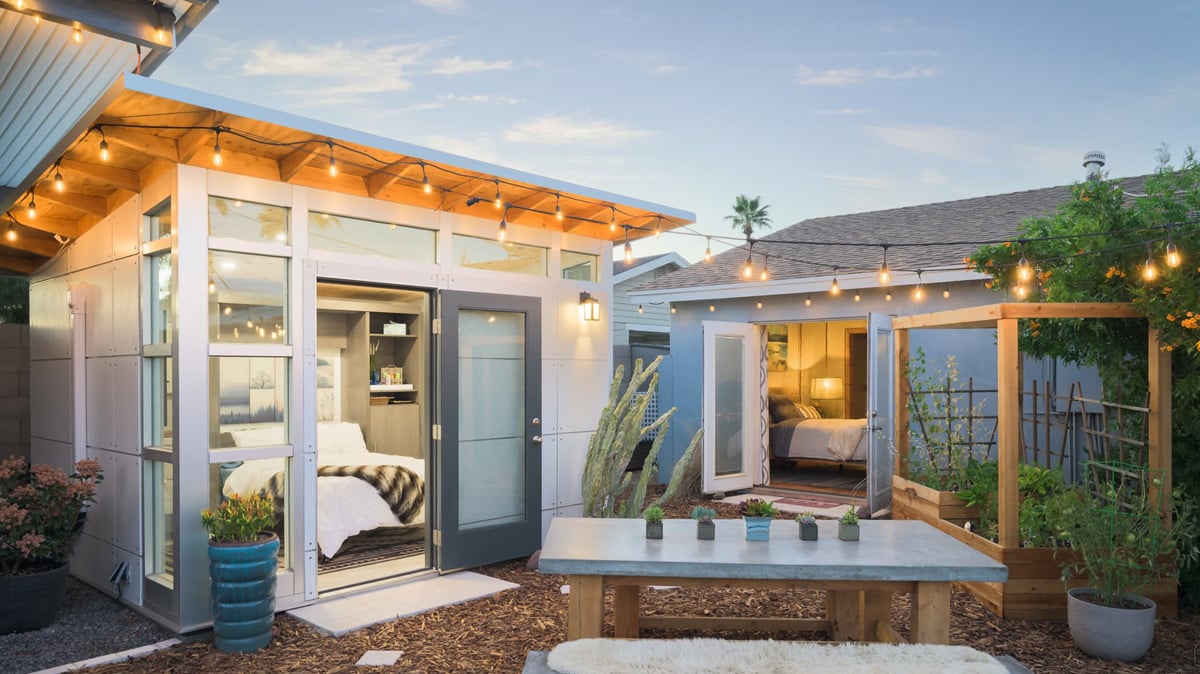
An accessory dwelling unit is a residential unit located on a property with an existing or proposed primary dwelling, subject to applicable state and local requirements.
ADUs generally provide independent living facilities, including areas for sleeping, sanitation, and cooking.
They are sometimes called backyard cottages, granny flats, in-law units, or secondary residences.
Several types of ADUs may be available depending on the property.
Detached ADU
A detached ADU is a separate residential structure located on the same parcel as the primary residence.
Detached ADUs can provide independent living accommodations and separation from the main home.
Attached ADU
An attached ADU is constructed as part of or physically connected to the primary residential structure.
Applicable design, access, building-code, and fire-safety requirements must be considered.
Conversion ADU
A conversion ADU uses eligible existing building space, such as a garage or another qualifying portion of an existing structure.
Conversion projects may be subject to different setback and development standards from newly constructed detached ADUs.
Junior Accessory Dwelling Unit
A junior accessory dwelling unit, or JADU, is generally a smaller residential unit associated with a qualifying single-family residence.
JADUs are limited to 500 square feet and are subject to specific requirements governing their location, facilities, and occupancy arrangements.
Why Did California HCD Challenge Palo Alto's ADU Regulations?
California has enacted several laws intended to reduce unnecessary barriers to accessory dwelling unit construction.
State law establishes requirements that cities and counties must follow when reviewing qualifying ADU applications.
Although municipalities retain authority to enforce applicable building, fire-safety, and certain development regulations, they cannot impose local restrictions that conflict with controlling state ADU law.
Palo Alto has faced state scrutiny over its ADU regulations.
HCD's 2022 Review
In December 2022, HCD raised concerns about whether portions of Palo Alto's regulations complied with California's ADU requirements.
The review formed part of the state's broader oversight of local housing ordinances and its efforts to ensure that qualifying ADUs could be approved under applicable law.
The October 2024 Findings Letter
On October 29, 2024, HCD issued a formal findings letter concerning Palo Alto's Ordinance No. 5585, which the city had adopted in 2023.
HCD identified several conflicts with state law.
Among the issues were references to outdated statutory sections, height requirements for certain detached ADUs, and limitations on combinations of eligible accessory and junior accessory dwelling units.
One significant concern involved the city's treatment of detached ADU height allowances near qualifying transit locations.
Another involved restrictions that could prevent property owners from constructing combinations of ADUs and JADUs authorized by state law.
HCD directed the city to respond to its findings and address the identified conflicts.
The October 29, 2024 HCD findings letter remains an important historical document for understanding the relationship between Palo Alto's local regulations and statewide ADU requirements.
Palo Alto's Subsequent Ordinance Changes
Palo Alto subsequently amended its ADU regulations, including changes reflected in Ordinance No. 5656 in 2025.
The city's current ADU provisions appear in Chapter 18.09 of the Palo Alto Municipal Code.
Because the local ordinance was amended after HCD's 2024 findings, homeowners should not assume that every historical finding continues to describe the current version of the code.
They should instead review the latest local ordinance together with the state law currently in effect.
What Changed in California ADU Law in 2026?
California's ADU laws continued to evolve during 2025 and 2026.
Among the relevant changes, Senate Bill 543 introduced additional procedural and technical clarifications effective January 1, 2026.
These include rules concerning application completeness, measurement of ADU floor area, certain fees, and allowable ADU and JADU configurations.
HCD published an updated Accessory Dwelling Unit Handbook in March 2026 to explain the current statutory framework.
For homeowners, these changes underscore the importance of relying on current regulations rather than older ADU guides or outdated municipal summaries.
Official guidance is available through the California HCD ADU Handbook.
How Large Can an ADU Be in Palo Alto?
One of the most common questions homeowners ask is how much additional living space they can construct.
Under California state law, qualifying residential properties generally benefit from protections allowing certain detached ADUs of up to 800 square feet, subject to applicable height, setback, and other requirements.
Palo Alto's current municipal code also contains standards governing larger ADUs that fall outside the relevant state-exempt categories.
Under Palo Alto Municipal Code Section 18.09.040, certain ADUs subject to local standards may have maximum sizes of:
- 900 square feet for qualifying attached or detached units.
- 1,000 square feet for qualifying units containing two or more bedrooms.
Additional restrictions and qualifications may apply, including provisions concerning the size of attached ADUs relative to the primary residence.
These local maximums should not be interpreted as universal state limits on every ADU configuration.
For example, conversion ADUs and units qualifying under state-mandated approval provisions may follow different standards.
Homeowners should have a qualified designer or architect evaluate the applicable approval category before determining the maximum buildable area.
What Are the Setback Requirements for a Palo Alto ADU?
For many qualifying newly constructed detached ADUs, California law generally establishes four-foot side and rear setbacks.
Palo Alto's current ADU regulations reflect these standards for applicable units.
However, setbacks can differ depending on the proposed ADU type.
For example, a lawful existing structure being converted to an ADU may qualify for different treatment from a newly constructed detached building.
Front setbacks, corner-lot conditions, fire-safety requirements, easements, and other site-specific constraints also require evaluation.
A four-foot setback does not mean every area of a backyard is automatically buildable.
Before purchasing a property or preparing construction plans, homeowners should review a current survey, available title documents, easements, and the proposed building location.
How Tall Can a Detached ADU Be in Palo Alto?
Height requirements depend on the applicable approval category, the property, and the ADU's characteristics.
California state law generally protects a minimum height of 16 feet for qualifying detached ADUs.
In certain circumstances, such as proximity to qualifying major transit stops or high-quality transit corridors, a height allowance of 18 feet applies.
An additional two feet may be permitted for certain ADUs with roof pitches aligned with the primary dwelling.
Other height provisions may apply to attached ADUs or qualifying multifamily properties.
These distinctions were among the issues identified in HCD's 2024 review of Palo Alto's ADU ordinance.
For homeowners planning an ADU with vaulted ceilings, a loft, or two-story design elements, the applicable height rules should be confirmed before completing architectural plans.
Does Palo Alto Require Additional Parking for an ADU?
Palo Alto's current ADU development tables generally specify no additional parking requirement for the ADU categories they address.
State law also restricts the circumstances under which local governments may require ADU parking.
In addition, replacement parking generally cannot be required solely because an existing garage, carport, or other qualifying parking structure is converted or demolished in connection with an ADU.
However, property-specific access, emergency vehicle requirements, and other building or safety considerations may still apply.
Homeowners should distinguish between requirements for the ADU itself and requirements that may independently apply to other improvements on the property.
Can a Palo Alto Property Have More Than One ADU?
In certain situations, yes.
California law provides for several categories of accessory dwelling units, including certain conversions of existing residential space and detached new construction.
Depending on eligibility, a property containing a single-family residence may qualify for an attached or conversion ADU, a detached ADU, and a JADU.
Palo Alto's current Section 18.09.030 recognizes state-protected combinations of units for eligible single-family properties.
Multifamily properties may qualify for additional ADUs under separate statutory provisions.
However, eligibility depends on the configuration of the property, the existing or proposed development, and the applicable state-law categories.
It would be incorrect to assume that every single-family parcel can automatically accommodate three additional residential units.
Before planning multiple units, homeowners should obtain a property-specific analysis of the applicable regulations and available building area.
How Long Does It Take to Get an ADU Permit in Palo Alto?
California law generally requires qualifying ADU applications to receive ministerial consideration, meaning that approval is based on applicable objective standards rather than a discretionary evaluation of whether the project is desirable.
Under the 2026 statutory framework, local agencies generally must determine whether an ADU application is complete within 15 business days, subject to applicable requirements.
For qualifying complete applications, the law generally establishes a 60-day period for approval or denial, with statutory exceptions and circumstances that may affect the timeline.
These requirements do not eliminate the need to satisfy applicable building and fire-safety codes.
Nor do they guarantee that every application will receive a building permit within 60 calendar days of its initial submission.
Typical ADU Permitting Steps
- Review the property's zoning and site conditions.
- Determine the proposed ADU category and applicable standards.
- Obtain survey or site information when appropriate.
- Prepare architectural and engineering plans.
- Review utility connections and infrastructure requirements.
- Submit the building permit application and required documents.
- Respond to applicable agency comments and complete the review process.
- Obtain the necessary permits before construction.
- Complete inspections and final approval requirements.
Homeowners can find submission requirements on the City of Palo Alto's Building Permit website.
Can You Convert an Existing Garage Into an ADU?
Garage conversions may be permitted when the existing structure and proposed improvements satisfy applicable requirements.
However, the feasibility of a conversion depends on several matters:
- Whether the existing structure was legally constructed
- The building's condition and structural suitability
- Applicable fire and life-safety requirements
- Ceiling height and habitable-space requirements
- Water, sewer, electrical, and other utility connections
- Available access and emergency egress
- Other requirements applicable to the proposed conversion
Certain existing nonconforming structures may benefit from state-law protections that permit conversion without requiring the same setbacks as new construction.
However, an existing garage should not be assumed to qualify for residential occupancy without appropriate review and permits.
Can a Palo Alto ADU Be Rented?
ADUs may provide additional rental housing, subject to applicable laws and restrictions.
Palo Alto's municipal code includes provisions generally restricting rentals of ADUs covered by the relevant section to terms of at least 30 days.
Homeowners should also review applicable state law, local rental rules, and any recorded property restrictions.
Potential rental income should be evaluated together with construction costs, insurance expenses, maintenance, financing, taxes, and other ownership obligations.
An ADU may provide useful housing flexibility, but rental income and investment returns are not guaranteed.
Can an ADU Be Sold Separately From the Main House?
In general, an accessory dwelling unit is not automatically a separate parcel or independently transferable residence simply because it has its own entrance, kitchen, and living facilities.
California law provides certain limited pathways for separate ADU conveyance under specified conditions.
Palo Alto's municipal code also references the state statutory provisions addressing separate conveyance.
However, separate sale eligibility depends on the applicable legal structure and statutory requirements.
Homeowners should not assume that an ADU can be separately sold, financed, or transferred without further legal and title analysis.
Can an ADU Increase a Palo Alto Property's Value?
An accessory dwelling unit may contribute value by adding lawful residential living space and increasing a property's flexibility.
Potential buyers may find an ADU attractive for extended-family accommodation, guest use, or rental opportunities.
However, the market value attributable to an ADU depends on its characteristics and the surrounding real estate market.
Important factors include:
- Whether the ADU is fully permitted
- Unit size and functional layout
- Construction quality
- Privacy and access arrangements
- Remaining usable outdoor space
- Maintenance and operating expenses
- Rental potential, where applicable
- Comparable property sales
An expensive ADU project does not automatically increase the property's resale value by an amount equal to its construction cost.
Buyers and homeowners should evaluate the project based on its intended use, financial feasibility, and applicable market conditions.
What Should Palo Alto Homebuyers Investigate Before Purchasing Property With ADU Potential?
For buyers interested in adding an ADU, the property's development characteristics may be an important part of the purchase decision.
Before making an offer, investigate the proposed construction area and potential constraints.
1. Lot Dimensions and Property Boundaries
Review available survey information and confirm that the proposed ADU location fits within the property's legal boundaries.
2. Easements
Utility, access, drainage, and other easements may restrict construction in portions of a property.
3. Protected Trees
Tree protection requirements may affect the location, foundation design, excavation, and construction methods of a proposed ADU.
4. Existing Structures and Permits
Unpermitted improvements or unusual existing building conditions may affect the feasibility and cost of additional construction.
5. Utilities and Infrastructure
Water, sewer, electrical, drainage, and other systems should be evaluated for the proposed development.
6. Applicable State and Local Regulations
Determine which ADU approval category applies and whether the proposed design qualifies under the relevant rules.
The presence of a large backyard does not guarantee the right to construct an ADU of any desired size or design.
Property-specific due diligence is essential.
What Does Palo Alto's ADU Policy Mean for Home Sellers?
Homeowners considering selling may wish to evaluate whether their properties offer lawful accessory dwelling unit opportunities.
Potential ADU benefits may be relevant to some buyers, particularly those seeking flexible living arrangements or additional usable space.
However, sellers should avoid advertising unverified development rights as guaranteed.
If an existing ADU is included in the sale, accurate information regarding permits, legal use, square footage, and relevant restrictions should be provided.
For a property without an ADU, any discussion of future development should distinguish between general statutory possibilities and project-specific feasibility.
A professional market analysis can help determine how buyers may value an existing permitted ADU or potential future improvements.
Frequently Asked Questions About Palo Alto ADU Regulations
Can I build an 800-square-foot ADU in Palo Alto?
California state law generally protects qualifying detached ADUs of up to 800 square feet, subject to applicable height, setback, building-code, and eligibility requirements. Property-specific restrictions should be reviewed before construction.
What are the ADU setbacks in Palo Alto?
Qualifying new detached ADUs generally benefit from four-foot side and rear setback standards. Different rules can apply to conversions, attached units, and other development configurations.
Does Palo Alto allow ADUs larger than 800 square feet?
Yes, certain ADUs subject to Palo Alto's local standards may qualify for up to 900 square feet, or 1,000 square feet when they contain two or more bedrooms. Other eligibility and development standards apply.
How tall can an ADU be?
State law generally protects a minimum height of 16 feet for qualifying detached ADUs, with additional allowances in certain circumstances. The applicable height depends on the ADU type and site conditions.
Does Palo Alto require additional ADU parking?
The city's current ADU tables generally specify no additional parking for the categories they address. Property-specific safety and access requirements should still be reviewed.
Can I build both an attached and detached ADU?
Some qualifying single-family properties may accommodate multiple state-protected ADU types, potentially together with a JADU. Eligibility depends on the configuration and applicable statutory categories.
How long does an ADU permit take?
State law generally provides a 15-business-day completeness review framework and a 60-day decision period for qualifying complete applications, subject to applicable exceptions. Project preparation, revisions, and construction require additional time.
Did California require Palo Alto to change its ADU regulations?
Yes. HCD issued findings identifying conflicts with state ADU law, including a formal October 29, 2024 review of Palo Alto's 2023 ordinance. Palo Alto subsequently amended its ADU rules in 2025. Current applications should be evaluated under the presently applicable state law and local regulations.
Can I sell an ADU separately from the primary residence?
Generally, an ADU is not automatically separately transferable. California law allows certain separate conveyances under limited statutory conditions, but eligibility requires property-specific legal and title analysis.
Final Thoughts: Palo Alto ADU Rules Continue to Evolve
Palo Alto's accessory dwelling unit regulations have changed substantially since the state's initial concerns about local ADU restrictions.
HCD's formal reviews and California's continuing legislative reforms reflect a statewide effort to expand housing opportunities and establish more consistent requirements for qualifying ADU development.
For homeowners, the most important issue is understanding how current law applies to a particular property.
Potential ADU projects should be evaluated based on lot characteristics, building regulations, development standards, financing, and intended use.
For homebuyers, a property's ADU potential may be an important consideration, but it should never be assumed without appropriate investigation.
Whether you are planning a backyard cottage, converting existing space, or evaluating a property with development potential, informed decisions begin with understanding the applicable state and local regulations.
Work With Milad Real Estate
At Milad Real Estate, we assist homebuyers and sellers throughout Palo Alto, Menlo Park, Atherton, Los Altos, Woodside, and surrounding Silicon Valley communities.
Founded by Aria Vatankhah, a California real estate broker and attorney, Milad Real Estate combines real estate brokerage experience with legal knowledge to assist clients in evaluating property characteristics, negotiating transactions, and understanding real estate-related considerations.
Whether you are considering purchasing a Palo Alto home with ADU potential or preparing to sell a property with an existing accessory dwelling unit, we welcome the opportunity to discuss your real estate objectives.
Explore nearby communities:
- Palo Alto Real Estate
- Menlo Park Real Estate
- Atherton Luxury Real Estate
- Los Altos Real Estate
- Woodside Luxury Properties
Contact Aria Vatankhah
Real Estate Broker & Attorney | Milad Real Estate
Phone: (650) 799-8168
Email: [email protected]
Official Sources: California HCD – ADU Handbook, March 2026; HCD – Palo Alto ADU Ordinance Findings, October 29, 2024; Palo Alto Municipal Code Chapter 18.09; City of Palo Alto – Building Permit Applications.
Disclaimer: This article provides general information about California ADU law and Palo Alto regulations as of November 2026. It is not a legal opinion, permit determination, architectural assessment, or guarantee of development rights. Requirements may vary by property and change through legislation, ordinance amendments, or administrative interpretation. Property owners should verify current requirements with the City of Palo Alto and qualified legal, architectural, and engineering professionals before relying on any development proposal.