Silicon Valley Housing Market Guide | Updated November 2026 | 2027 Outlook
As 2026 comes to a close and 2027 approaches, many renters throughout Silicon Valley face an important financial decision: Should they renew their lease, move to another rental property, or purchase a home?
For residents of Palo Alto, Menlo Park, Redwood City, and surrounding Peninsula communities, the decision can have significant long-term financial implications.
Although homeownership can offer greater housing stability and opportunities to build equity, purchasing a home is not automatically more affordable than renting. Mortgage rates, property prices, available savings, anticipated ownership costs, and the length of time you plan to remain in the property all matter.
Recent rental market data also reveals an important distinction: while national rent growth has slowed considerably, several Bay Area markets continue to experience significant rental demand and rising asking rents.
Understanding these differences can help renters make informed decisions as they plan for 2027.
Are Rents Still Rising in 2026?
The rental market has changed significantly since the dramatic increases experienced during 2021 and 2022.
According to Apartment List's October 2026 National Rent Report, the national median rent was approximately $1,384 per month, representing an increase of just 0.1% compared with October 2025.
This reflects a substantial moderation in national rental growth compared with the early pandemic-era housing market.
However, national statistics do not tell the entire story, particularly for renters living in Silicon Valley.
Silicon Valley Rental Prices Are Following a Different Trend
According to Zillow's September 2026 Rent Report, typical asking rents increased approximately:
- 8.3% year over year in the San Jose metropolitan area.
- 11.8% year over year in the San Francisco metropolitan area.
- 2.7% nationally.
These figures demonstrate that rental market conditions can vary significantly by geographic area and by the methodology used to measure rents.
Zillow also reported particularly strong growth in rental demand in San Jose and San Francisco during the same period.
For renters in Palo Alto, Menlo Park, and neighboring communities, these regional trends are relevant, but individual rental prices may differ based on the specific neighborhood, property type, condition, and lease terms.
Rather than assuming rents will continue increasing at the same pace in 2027, prospective renters and buyers should evaluate current listings, comparable properties, and their own housing needs.
Sources: Apartment List National Rent Report and Zillow September 2026 Rent Report.
Why Are Some Silicon Valley Renters Considering Buying a Home?
Several factors may motivate renters to explore homeownership, including the desire for greater residential stability, more control over their living space, and the opportunity to build long-term equity.
In Silicon Valley, the decision may also be influenced by career plans, family needs, neighborhood preferences, and expectations about future housing expenses.
However, purchasing a home requires a realistic understanding of the financial commitment involved.
1. A Fixed-Rate Mortgage Can Provide Greater Payment Predictability
One potential advantage of homeownership is the ability to obtain a fixed-rate mortgage.
With a traditional 15-year or 30-year fixed-rate mortgage, the interest rate and scheduled monthly principal and interest payment generally remain constant throughout the loan term.
This can make one major component of housing expenses more predictable compared with a rental arrangement in which the rent may change at renewal.
However, a fixed-rate mortgage does not mean the total cost of homeownership remains unchanged.
Property taxes, homeowners insurance, maintenance costs, utilities, and homeowners association dues may increase over time.
Buyers should budget for these expenses rather than comparing rent only with the mortgage principal and interest payment.
2. Homeownership Creates an Opportunity to Build Equity
Home equity is the difference between a property's market value and the outstanding debt secured by the property.
When a homeowner makes payments on a traditional amortizing mortgage, a portion of each principal and interest payment reduces the loan balance.
Over time, this principal repayment can increase the homeowner's equity, assuming the property's value remains unchanged.
Homeowners may also benefit if the property appreciates in value.
However, real estate prices do not always rise. Property values can decline, and transaction costs may reduce or eliminate the financial benefit of selling.
In addition, a larger share of mortgage payments may go toward interest during the early years of a long-term loan.
Renters do not build equity in the property they occupy, but they may retain greater financial flexibility and potentially invest funds that would otherwise be used for a down payment or ownership expenses.
Therefore, building equity is an important potential benefit of buying, but it should not be treated as a guaranteed investment return.
3. Buying a Home Can Provide More Control Over Your Living Space
Homeownership may allow greater flexibility to renovate, personalize, and improve a residence.
Depending on the property and applicable restrictions, homeowners may be able to remodel kitchens, renovate bathrooms, modify landscaping, or expand their living space.
These possibilities can be particularly attractive for buyers seeking a long-term residence in communities such as Palo Alto, Menlo Park, and Redwood City.
However, property modifications remain subject to applicable zoning regulations, building permits, easements, homeowners association requirements, and other restrictions.
For renters, the ability to make substantial alterations is generally more limited and usually requires landlord approval.
4. Homeownership May Offer Greater Long-Term Residential Stability
Purchasing a home can reduce uncertainty associated with lease renewals, landlord decisions, and potential changes in rental availability.
For buyers intending to remain in the same community for many years, this stability can be an important consideration.
However, California renters also have legal protections that may limit rent increases and certain terminations of tenancy.
The decision to buy should therefore be based on the buyer's circumstances rather than an assumption that all renters face unrestricted rent increases or displacement.
What Are California's Rent Increase Limits for 2026–2027?
California's Tenant Protection Act establishes rent increase limitations for many qualifying residential rental properties.
Under the statewide law, covered rent increases generally cannot exceed 5% plus the applicable change in the cost of living, subject to a maximum of 10% over a 12-month period.
According to the California Attorney General's published guidance, the statewide maximum for covered properties in San Mateo County is 8.8% for increases taking effect between August 1, 2026, and July 31, 2027.
For covered properties in Santa Clara County, the corresponding statewide maximum is 8.6% during that period.
These percentages are legal ceilings for applicable tenancies, not predictions of actual rent increases.
Importantly, the statewide law contains exemptions, including certain newer properties and qualifying single-family homes or condominiums. Additional requirements apply to some exemptions.
Local rent stabilization ordinances may provide stronger protections for certain properties.
Tenants and landlords should confirm which laws apply to their specific property before relying on a particular rent increase limit.
For additional information, visit the California Attorney General's Rent Increase Limits.
How Much Does It Cost to Buy a Home in Silicon Valley in 2026?
One of the biggest challenges facing renters who want to become homeowners is the difference between monthly rental expenses and the cost of financing a home.
Mortgage rates remain an important factor in housing affordability.
According to Freddie Mac, the average 30-year fixed-rate mortgage rate was 7.24% as of October 29, 2026.
This is significantly higher than the unusually low mortgage rates available during portions of 2020 and 2021.
Higher interest rates increase monthly mortgage payments and can affect the price range buyers can comfortably afford.
For a practical illustration, consider the following hypothetical home purchase.
Example: Purchasing a $1.5 Million Home
Item | Amount |
|---|---|
Home purchase price | $1,500,000 |
Down payment (20%) | $300,000 |
Mortgage principal | $1,200,000 |
Illustrative interest rate | 7.24% fixed |
Loan term | 30 years |
Approximate monthly principal and interest | $8,178 |
This example uses Freddie Mac's October 29, 2026 national average rate solely for illustration. It does not represent a lender quote or the rate available to any particular buyer.
The estimated monthly principal and interest payment does not include property taxes, homeowners insurance, maintenance, utilities, or other ownership expenses.
Buyers must also consider closing costs and the financial opportunity cost of the $300,000 down payment.
The example demonstrates why a buyer should not assume that homeownership will immediately reduce monthly housing expenses compared with renting a similar property.
Renting vs. Buying: A Five-Year Financial Comparison
For many Silicon Valley households, the most useful comparison is not simply the monthly mortgage payment versus rent. It is the total financial impact over the expected period of occupancy.
Consider a hypothetical rental property costing $5,000 per month.
If rent remains unchanged, total rent payments over five years would equal $300,000.
If rent increases by 3% annually, total payments over five years would be approximately $318,500, assuming each year's increase begins after the previous 12-month period.
If rent increases by 5% annually, the five-year total would be approximately $331,500 under the same assumptions.
Annual Rent Increase | Approximate Five-Year Rent Total |
|---|---|
0% | $300,000 |
3% | $318,500 |
5% | $331,500 |
These are hypothetical scenarios rather than forecasts for Silicon Valley rent increases.
To make a fair comparison with buying, prospective purchasers should calculate mortgage interest, property taxes, insurance, maintenance, HOA fees, closing costs, potential selling expenses, and the opportunity cost of the down payment.
They should also account for mortgage principal repayment and consider multiple possible home-price scenarios, including appreciation, unchanged values, and depreciation.
Only after considering these factors can buyers estimate whether purchasing a particular property makes financial sense over their expected ownership period.
When Does Buying Make More Sense Than Renting?
Buying may be an attractive option for households that plan to remain in the same location for an extended period, have stable finances, and can comfortably manage the full cost of homeownership.
Homeownership may be particularly appealing when:
- You expect to remain in the home for several years or longer.
- You have sufficient funds for a down payment and closing costs.
- You can maintain emergency reserves after purchasing.
- Your employment and income are reasonably stable.
- You want greater control over property improvements and living arrangements.
- The property meets your long-term housing needs.
- You are comfortable with the risks of changes in property values and ownership expenses.
However, buyers should avoid relying solely on expected appreciation or future mortgage refinancing to justify a purchase that is otherwise financially difficult.
When Might Renting Be the Better Financial Decision?
Renting can be a financially sensible choice, particularly when the cost of purchasing a comparable property is substantially higher.
Continuing to rent may be appropriate if:
- You expect to relocate within the next few years.
- You are uncertain about future employment or income.
- You would need to use nearly all available savings for a down payment.
- Comparable rental properties are considerably less expensive than ownership.
- You want to avoid maintenance and major repair responsibilities.
- You prefer to keep funds available for investments, education, or business needs.
Renting may also allow households to live in neighborhoods where purchasing a similar residence would exceed their comfortable budget.
The right decision is not necessarily the one that results in owning property as soon as possible. It is the decision that best supports your financial stability and housing objectives.
Renting vs. Buying in Palo Alto, Menlo Park, and Redwood City
Housing conditions vary across the San Francisco Peninsula. Buyers and renters should assess the specific neighborhoods and types of properties that match their needs.
Palo Alto: Premium Location and Long-Term Housing Demand
Palo Alto attracts residents interested in its established neighborhoods, proximity to Stanford University, Silicon Valley employers, and downtown amenities.
For prospective buyers, Palo Alto's relatively high acquisition costs mean that renting may require a significantly lower initial cash commitment than purchasing.
However, buyers who expect to remain in the community for many years may place substantial value on long-term residential stability and ownership.
Menlo Park: Neighborhood Variety and Silicon Valley Access
Menlo Park offers a variety of residential settings, from established single-family neighborhoods to condominium and townhouse communities.
The appropriate rent-versus-buy decision depends heavily on the property type, neighborhood, purchase price, and available financing.
For households considering a long-term move, Menlo Park may offer opportunities across different housing categories, although affordability varies substantially.
Redwood City: A Range of Housing Options
Redwood City provides access to major Peninsula employment centers and includes a diverse selection of residential neighborhoods.
Buyers may find single-family homes, townhouses, and condominiums with different price points and ownership costs.
Comparing the cost of renting a particular property with purchasing a similar property can help clarify whether buying is financially practical.
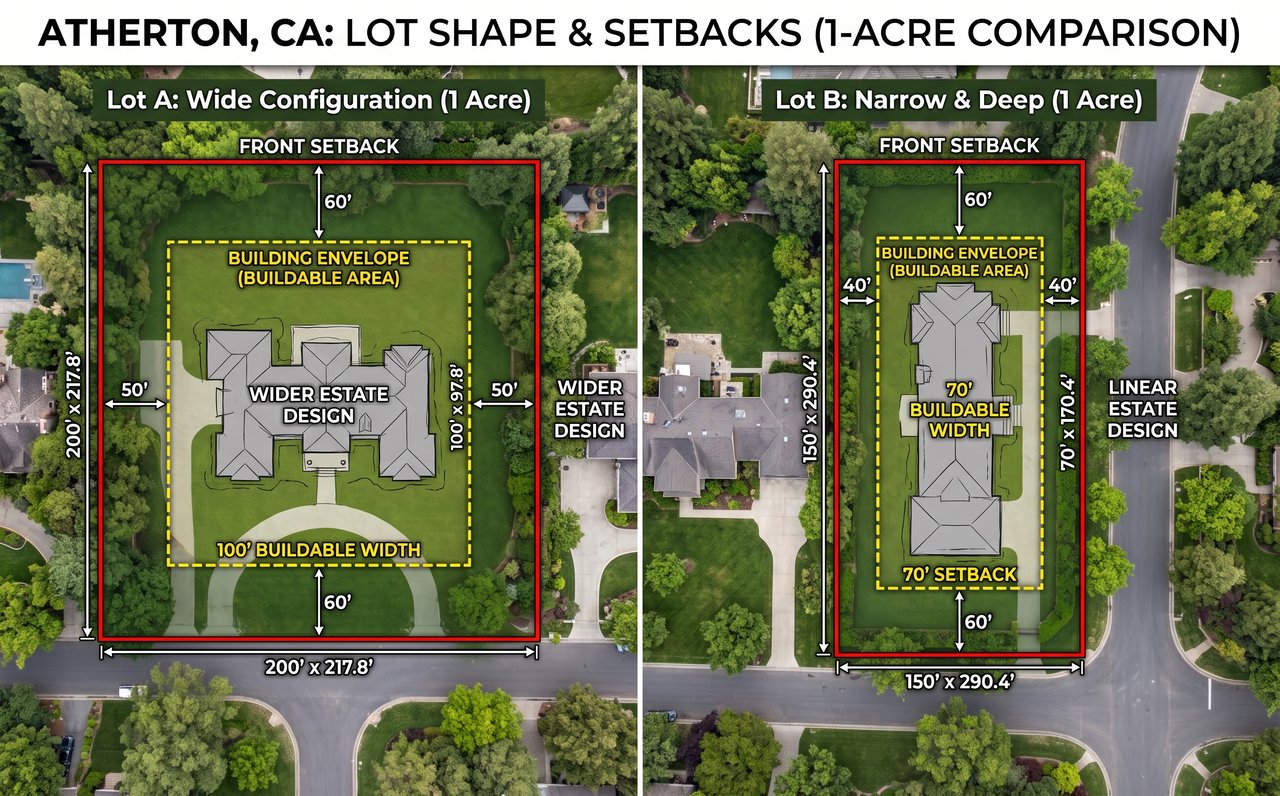
Atherton: A Different Luxury Housing Market
Atherton represents a distinct segment of the Peninsula housing market, characterized by large residential estates and substantial property values.
For buyers evaluating multimillion-dollar properties, the rent-versus-buy decision often involves additional considerations such as investment liquidity, jumbo mortgage financing, property maintenance, and long-term estate ownership objectives.
These decisions should be evaluated individually rather than using general national rent-versus-buy assumptions.
What Should Renters Watch for in the 2027 Housing Market?
As the housing market moves into 2027, several developments could influence the decision to rent or buy.
1. Mortgage Interest Rates
Changes in mortgage rates can significantly affect monthly payments and purchasing power.
A decline in rates could improve affordability, while higher rates may increase the cost of financing.
However, future interest rates cannot be predicted with certainty.
2. Local Home Inventory
The number and quality of available homes affect buyer choices and negotiation opportunities.
Inventory conditions should be evaluated separately for each city, neighborhood, and property category.
3. Rental Market Conditions
Continued rental demand, new apartment construction, employment trends, and local housing supply may influence asking rents during 2027.
The strong rental growth reported in some Bay Area markets during 2026 does not guarantee that rents will increase at the same rate in 2027.
4. Employment and Household Finances
Silicon Valley's technology and professional employment markets can influence both rental demand and homebuying activity.
Buyers should prioritize their personal financial circumstances rather than relying exclusively on broad market expectations.
5. Property Taxes, Insurance, and Maintenance Costs
Even if mortgage rates decline, the total cost of owning a home may change because of property taxes, insurance premiums, and property maintenance expenses.
These costs deserve particular attention when considering older residences or properties requiring substantial improvements.
How to Decide Whether You Should Rent or Buy in 2027
Before making a decision, consider the following steps:
- Identify your preferred communities. Compare locations based on commuting needs, available housing, neighborhood amenities, and long-term plans.
- Review current rental listings. Determine the realistic cost of renting the type of property you want.
- Establish a purchase budget. Evaluate savings, income, financing options, and the total monthly cost of ownership.
- Compare similar properties. Avoid comparing the rent for a small apartment with the mortgage payment for a substantially larger single-family home.
- Estimate your holding period. Consider how long you expect to remain in the property and the transaction costs associated with buying and selling.
- Evaluate financial risks. Consider maintenance expenses, potential property value changes, employment stability, and emergency reserves.
- Consult qualified professionals. A mortgage lender, financial advisor, and knowledgeable real estate broker can help evaluate the choices relevant to your circumstances.
Frequently Asked Questions About Renting vs. Buying in 2026–2027
Is it better to rent or buy a house in Silicon Valley in 2027?
There is no universal answer. Buying may offer stability and equity-building opportunities, while renting may provide lower upfront costs and greater flexibility. The decision depends on home prices, mortgage rates, rental costs, finances, and anticipated length of occupancy.
Are rents increasing in Silicon Valley in 2026?
Yes, several Bay Area rental markets experienced meaningful increases in 2026. Zillow reported an 8.3% annual increase in typical asking rents in the San Jose metropolitan area as of September 2026. However, actual rent changes vary by neighborhood and property type.
Will Silicon Valley rents continue increasing in 2027?
Future rental growth is uncertain. Employment trends, housing supply, new construction, household demand, and broader economic conditions will influence rental prices during 2027.
Does buying a home protect you from rising housing costs?
A fixed-rate mortgage generally protects the scheduled principal and interest payment from increases over the loan term. However, property taxes, insurance, maintenance, and other ownership expenses may rise.
Is renting a waste of money?
No. Renting provides housing without the substantial upfront costs and ongoing responsibilities of property ownership. For some households, renting and investing available savings may be more appropriate than purchasing a home.
How long should you plan to stay in a home before buying?
A longer anticipated ownership period can make it easier to spread transaction costs over time. However, there is no universal break-even period. The appropriate timeline depends on purchase price, financing, rent alternatives, ownership expenses, potential appreciation or depreciation, and selling costs.
Should I wait for mortgage rates to decrease before buying?
Waiting may be reasonable if current financing costs make purchasing unaffordable. However, future rate changes are uncertain, and lower rates could also affect buyer competition. A purchase should be financially sustainable based on available financing rather than depending on a future refinancing opportunity.
Final Thoughts: Should You Continue Renting or Buy in 2027?
The decision to rent or buy in Silicon Valley is more complex than it was during the period of historically low mortgage rates.
Although rental prices have moderated nationally, several Bay Area markets experienced strong rental demand and rent growth during 2026.
At the same time, higher mortgage rates and substantial property prices mean that homeownership may require significantly greater monthly payments and upfront capital than renting a comparable residence.
For financially prepared buyers with long-term housing plans, purchasing can provide residential stability, control over the property, and opportunities to build equity.
For others, renting may remain the more practical financial choice while they save, invest, or wait for their circumstances to change.
The goal should not be to avoid renting at any cost. It should be to make an informed decision that supports your financial security, lifestyle, and long-term housing objectives.
Explore Your Housing Options With Milad Real Estate
At Milad Real Estate, we assist buyers and sellers throughout Palo Alto, Menlo Park, Redwood City, Atherton, Woodside, and the surrounding San Francisco Peninsula.
Founded by Aria Vatankhah, a California real estate broker and attorney, Milad Real Estate combines real estate brokerage experience with legal knowledge to help clients navigate property transactions and negotiations.
If you are currently renting and considering purchasing a home in 2027, we can help you explore available properties, understand local market conditions, and evaluate potential opportunities.
Explore Silicon Valley communities:
Contact Aria Vatankhah
Real Estate Broker & Attorney | Milad Real Estate
Phone: (650) 799-8168
Email: [email protected]
Sources: Apartment List – October 2026 National Rent Report; Zillow – September 2026 Rent Report; Freddie Mac – Primary Mortgage Market Survey; Consumer Financial Protection Bureau – Financial Considerations of Buying a Home; California Attorney General – Rent Increase Limits.
Disclaimer: This article is provided for general educational purposes and does not constitute individualized financial, investment, tax, mortgage, or legal advice. Rental statistics, mortgage rates, real estate prices, laws, and market conditions may change. Illustrative calculations are not forecasts or financing offers. Consult qualified professionals regarding your individual circumstances.